Venue Types
-
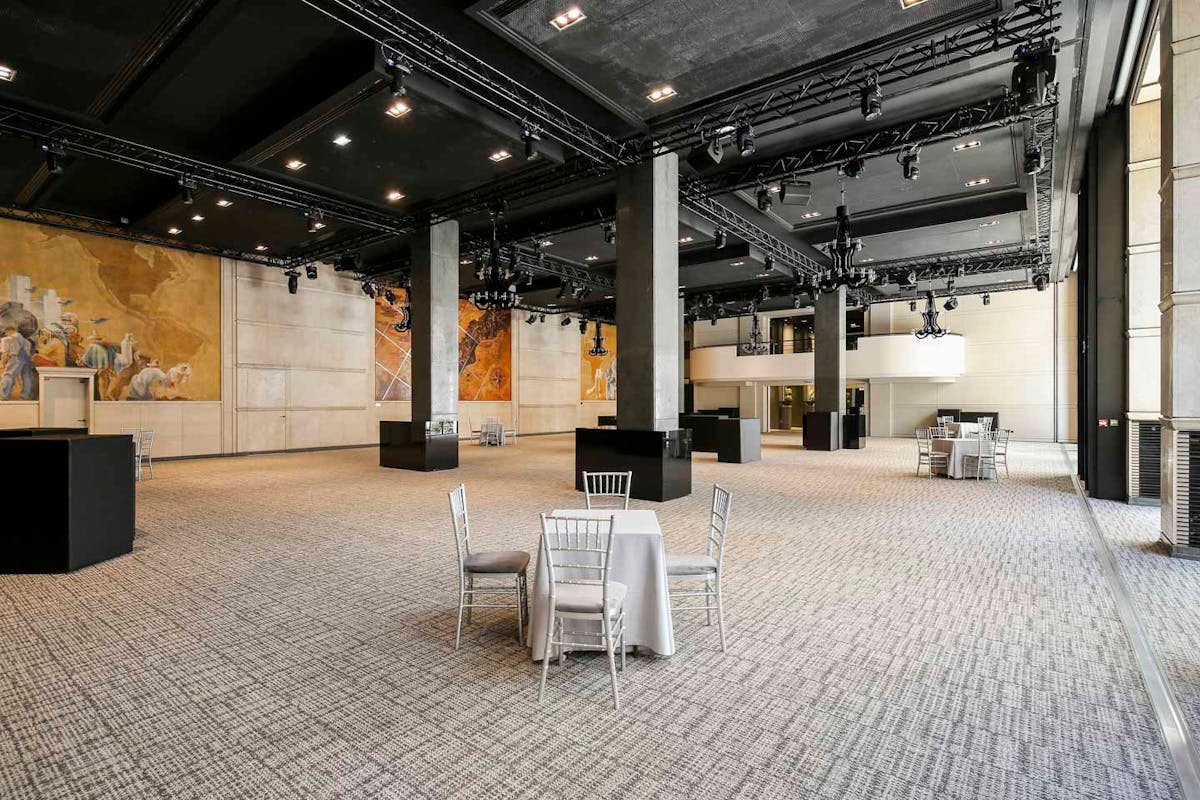
Ballrooms: ornate, full-service rooms with built-in lighting, sound and catering facilities. Suited to galas, fundraisers and formal dinners.
-
Warehouses: open, high-ceiling industrial spaces with exposed beams and roll-up doors. Popular for exhibitions, product launches and brand activations.
-
Rooftops: outdoor and semi-covered elevated spaces with city views. Used for cocktails, seasonal events and photo backdrops.
-
Lofts: converted residential or commercial buildings with polished concrete, skylights and flexible layouts. Work for intimate gatherings and creative events.
-
Gardens and Courtyards: outdoor venues with mature landscaping, patios and pergolas. Ideal for receptions, ceremonies and daytime activations.
-
Studios and Multi-Use Spaces: blank-canvas rooms in creative districts, often used by production companies and galleries for shoots, exhibitions and private events.
Los Angeles Event Neighborhoods
-
Downtown Los Angeles: the city's cultural and business center, home to the Walt Disney Concert Hall, The Broad and historic ballrooms. Corporate galas and cultural events concentrate here, and major hotels keep a steady stream of attendees in the area. Downtown La holds a large concentration of large event spaces, many in early twentieth-century buildings with original marble and high ceilings.
-
Arts District: former warehouses and industrial buildings east of Alameda with soaring ceilings, skylights and loading doors. Galleries and creative brands favor this area for exhibitions, brand launches and large-format activations. Arts District spaces often have floor plates that suit custom staging and flexible configurations.
-
Santa Monica: beachside commercial center with outdoor courtyards, open-air plazas and ocean-view terraces. Strong for seasonal events, press days and daytime activations, particularly during festival season and summer months.
-
Echo Park: neighborhood east of Downtown with converted warehouses, artist lofts and smaller independent venues. Less formal than Downtown and popular with creative industries and younger audiences.
-
Silver Lake: creative neighborhood with modern industrial buildings, design studios and mixed-use spaces. Known for music industry events, design showcases and press launches.
Why Book Large Event Space in Los Angeles
Los Angeles hosts two major seasons of concentrated event demand: awards season (January through March), when entertainment and fashion industries produce galas, screenings and press events across Hollywood and West Hollywood; and festival season (April and May), when cultural fairs and brand activations peak. The city's climate makes outdoor and covered-outdoor events viable almost year-round, so rooftops, gardens and courtyard spaces are genuinely usable spaces rather than seasonal afterthoughts.
Most Los Angeles event spaces come with generous square footage and high ceilings, which means you can build custom staging, handle large catering setups and host standing crowds without constraint. Loading access and parking are common, making logistics far simpler than in denser cities. Many landlords here have existing relationships with film and photography production, so they understand technical riders and rapid setup timelines.
The entertainment industry creates a distinctive audience for events in Los Angeles: a large resident population of creatives, producers and talent who attend openings and launches as a professional matter. That makes the city an unusually strong market for brand activations and press events, where the audience is part of the draw.
Pricing for Large Event Spaces in Los Angeles
Large event spaces in Los Angeles rent from around $950 to $1,650 per day for most spaces, or from $4,425 to $8,000 per week. Monthly rates typically run $15,000 to $21,250. Prices depend on neighborhood (Downtown and rooftops command premium rates), duration (longer bookings often negotiate lower per-day rates), and timing (award season and festival season see higher demand and firmer pricing).
Final rates depend on duration, exclusivity, and event timing. Pricing shown reflects typical asking ranges for spaces in the area; final booking terms are negotiated directly with the host.
FAQ
What size is considered a large event space?
Large event spaces typically start around 2,000 square feet and range up to 10,000 square feet or more. The definition varies by venue type: a large warehouse might be 5,000 to 8,000 square feet with 20-foot ceilings, while a large ballroom might be 3,000 to 5,000 square feet on a single floor. Check the listing details for exact square footage and capacity.
Can I rent a large event space for just one day?
Yes. Storefront listings accommodate daily, weekly and monthly rentals. Many spaces in Los Angeles are available by the day, particularly rooftops, studios and warehouse spaces used for shoots and activations. Confirm availability and any minimum-rental requirements directly with the host when you enquire.
Which neighborhoods have the most large event spaces?
Downtown Los Angeles, the Arts District and Santa Monica hold the densest concentrations of large venues. Downtown dominates for ballrooms and corporate events, the Arts District for creative and brand activations, and Santa Monica for outdoor and seasonal events. Browse by neighborhood using the filters to compare availability and pricing.
What is the booking timeline for a large event space?
Booking timelines depend on the space and the season. For non-peak periods, a space can often be secured two to four weeks in advance. During peak seasons (award season in January-March and festival season in April-May), early booking is advised. Talk directly to the host to confirm their availability and lead time.
Are rooftop and outdoor spaces available year-round?
Yes, Los Angeles has reliable dry weather and mild temperatures for most of the year, so rooftop, garden and courtyard spaces work year-round. Winter months (November through March) see occasional rain, which is worth planning for, but outdoor events remain viable. Indoor backup or covered structures are sensible precautions for winter bookings.
What should I look for when comparing large event spaces?
Prioritize floor area and ceiling height for your setup, parking and loading access for your equipment and catering, and neighborhood for your audience. Check whether the space includes tables, lighting and sound, or if you need to bring your own. Ask about cancellation terms and any house rules or permitted activities. Many spaces have restrictions on alcohol, music volumes or outdoor activity that affect what your event can do.