Why Toronto Draws Large Events
Toronto is Canada's largest city and its commercial capital, home to the country's center of gravity for banking, media, technology and advertising. That professional audience is exactly who fills a large event space: product launches, conferences, brand activations, exhibitions, and corporate gatherings that need room to breathe. The city's diversity, with roughly half its residents born outside Canada, means the audience at any sizable event is genuinely international, which is why global brands often choose Toronto as the entry point for a Canadian launch.
The city's commercial calendar reinforces that demand. The film festival in September is the city's biggest commercial week, drawing international press and talent to the entertainment district. Art Toronto in the autumn anchors a week of gallery programming citywide. The Christmas market in the Distillery District runs through late November and December, and DesignTO in January gives brands a reason to activate when almost nothing else is happening. Each of these periods drives demand for large event space rental in Toronto, and availability tightens well ahead of the dates.
What Large Means in Practice
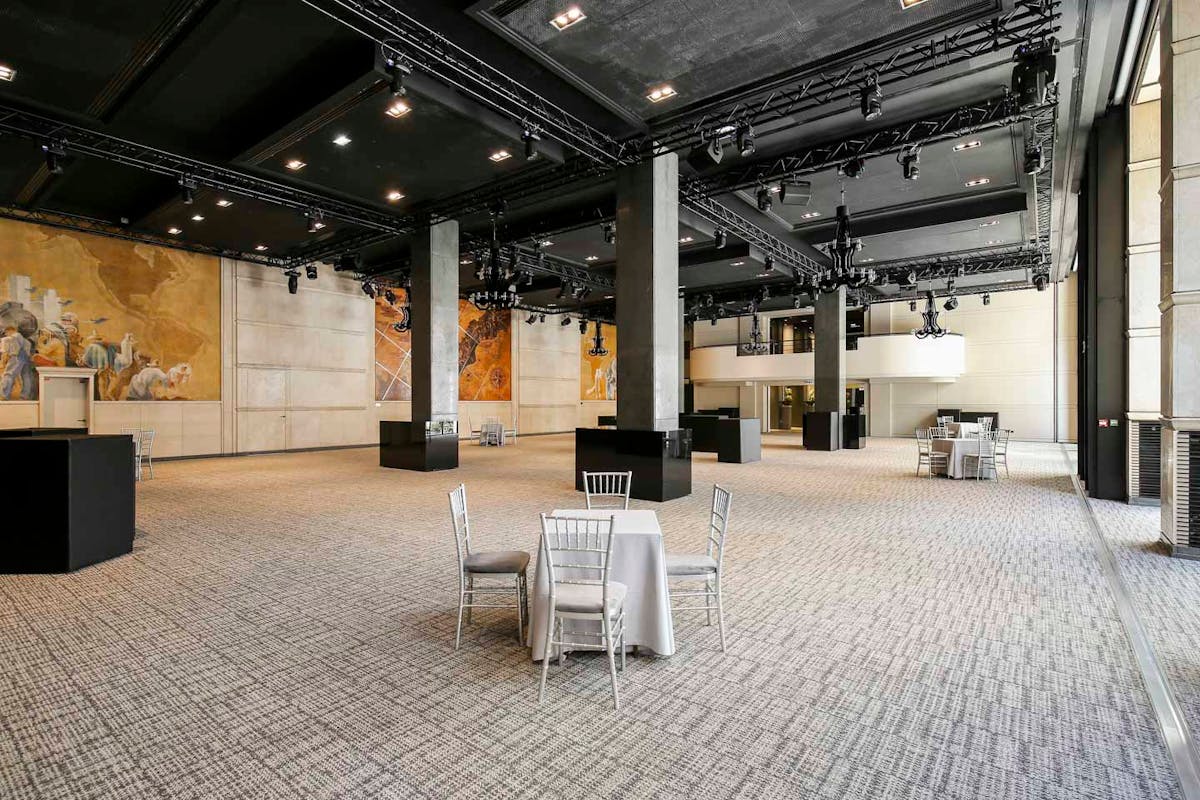
A large event space in Toronto typically means open-plan square footage that can hold a standing crowd for a launch party, seat a conference audience in rows, or clear to a single floor for an exhibition. Common formats include converted warehouse floors, street-level commercial units with high ceilings, and flexible multi-room venues that open into a single footprint.
Typical use cases for a big event space in Toronto include:
-
Corporate conferences and annual meetings
-
Product launches and press previews
-
Brand activations tied to the city's festival calendar
-
Exhibitions, trade shows, and industry showcases
-
Charity galas and fundraising events
A spacious event space gives a planner room for staging, catering, registration, and breakout areas without crowding the main floor, and that flexibility is what separates a large venue from a simply adequate one.
Pricing for Large Event Spaces in Toronto
Across Toronto, event spaces ask between about CA$500 and CA$850 a day, with the largest venues at the upper end and beyond. Weekly rentals run from about CA$2,500 to CA$4,000, making a multi-day activation or conference materially cheaper per day than a single-night booking.
Final rates depend on duration, exclusivity, and event timing. Pricing shown reflects typical asking ranges for spaces in the area; final booking terms are negotiated directly with the host.
Seasonal Demand and Timing
Toronto's year splits in two. From roughly May to October the city lives outdoors, patios take over sidewalks and curb lanes, and street festivals run most weekends. Rooftop and outdoor-adjacent event spaces fill quickly through this stretch, and the summer is a near-continuous run of neighbourhood programming organized by the city's business improvement areas.
From December through March, trade moves indoors. The PATH, tens of kilometres of climate-controlled underground walkway linking the downtown towers, carries a very large share of downtown footfall in deep winter. Indoor large-format venues become the only viable option, and the Christmas and new-year period is the retail calendar's peak.
Booking well ahead of Toronto's tentpole events is worth the planning. The September film festival, Pride Toronto in June, and the Caribbean Carnival in late summer each tighten supply in the districts where they concentrate.
Getting There
Toronto's central districts are dense and genuinely walkable, laid out on a fine grid with continuous street-level retail along the main streets. The transit system combines two main subway lines with an extensive streetcar network on the downtown commercial strips. The streetcars matter for event logistics: they run along exactly the corridors where large spaces cluster.
For guests arriving from outside the city, Pearson is Canada's largest airport with a rail link to Union Station in about twenty-five minutes, and a second island airport sits at the foot of downtown for short-haul flights. Parking downtown is genuinely difficult, so planning guest transport around transit is almost always the better call.
For event space in Toronto beyond the large-format category, the city search covers the full range of sizes and formats. Looking for something with a specific character, a unique event venue in Toronto or a large event venue in Toronto may narrow the field. For broader context on how brands use event spaces for design-led activations, see Design Week: How Brands Can Participate with Showrooms, Pop-Ups and Event Spaces.
FAQ
What counts as a large event space?
There is no fixed threshold, but the modifier typically signals enough open floor for a standing crowd, with room left for staging, catering setup, and circulation. Converted warehouse floors and open-plan commercial units are the most common formats in Toronto.
When should I book a large event space in Toronto?
As early as possible around tentpole events: the film festival in September, Pride in June, and the Christmas market season from late November. Outside those peaks, availability is broader, but multi-day holds still go quickly.
Are large event spaces available for single-day bookings?
Yes. Bookings in the mid-hundreds are common at the smaller end. Weekly rates from about CA$2,500 bring the per-day cost down, so a two or three-day activation is often better value than a single night.
Can I serve alcohol at a large event in Toronto?
Alcohol service at an event depends on whether the venue already holds a liquor licence. If it does not, requirements depend on the space and the local authority, and are worth confirming before booking. Ask the host which side of that line their venue sits on, because it frequently decides which space a brand picks.
How accessible are large event spaces in Toronto?
Accessibility is a legal obligation in Ontario and applies to businesses of every size. That means step-free entry, a clear route through the floor, and staff briefed before opening. Ask the host about access before confirming, especially in heritage buildings where a single step at the door is the recurring problem.