What counts as a large exhibition space
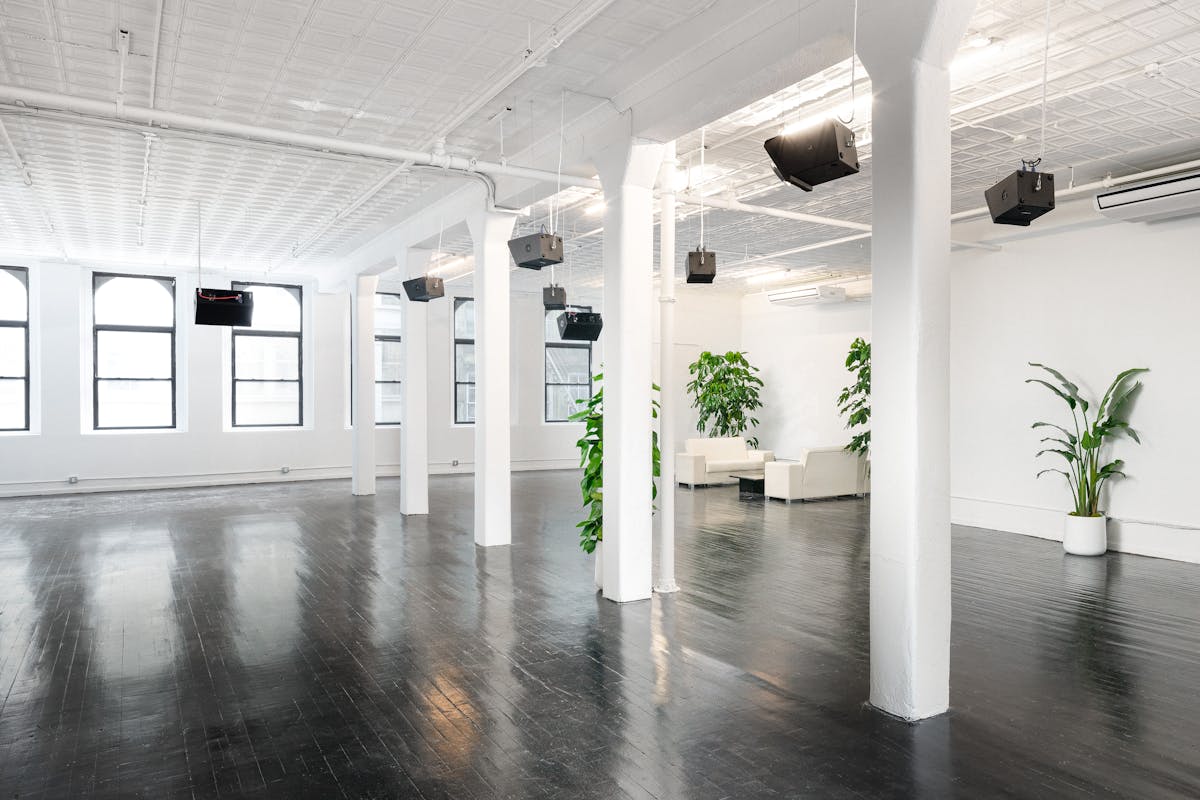
A large exhibition space in London typically starts at 2,000 square metres and scales upward, with many running 5,000 to 10,000+ square metres. These spaces need ceiling heights of at least 4 to 5 metres to accommodate wall-mounted work and overhead installations, and loading access (either dock or ground-level entry) to move artwork, fixtures and equipment in and out efficiently.
Common uses include art fairs and biennial exhibitions, trade shows and industry conferences, pop-up galleries and artist residencies, product launches and brand activations, and corporate events and conferences.
Neighbourhoods for large exhibitions
Shoreditch is the highest-demand short-term exhibition district in London. Its former warehouse and light-industrial stock provides the raw, flexible interiors that galleries and event producers prefer, and the area has an established arts infrastructure with independent galleries, artist studios and event venues clustered along and around Redchurch Street and Curtain Road.
Bethnal Green sits east of Shoreditch with similar warehouse availability and a strong independent arts base. It is slightly quieter and more affordable than its neighbour, and it draws both emerging curators and established galleries looking for a secondary venue.
King's Cross has been rebuilt around the station into a managed mixed-use estate with large flexible spaces, particularly at Coal Drops Yard. It combines office footfall with cultural programming, making it popular for trade shows, conferences and brand-backed exhibitions that benefit from weekday weekday commuter traffic.
Mayfair attracts luxury brand activations and high-value corporate events. Its gallery infrastructure is established and prestigious, and space there is taken for the address and adjacency as much as for the floorplate itself. Typical clients are international fashion houses, jewellers and auctioneers.
Whitechapel sits between Shoreditch and Bethnal Green with a strong independent gallery presence and lower rents than either. It is increasingly popular with emerging galleries and artist collectives moving out of Shoreditch.
Hackney is a large east London borough with spread-out gallery and studio space along multiple high streets rather than concentrated in one quarter. Rents are lower than central districts and the audience is more local, making it suitable for exhibitions targeting London residents rather than international visitors.
Space characteristics and why they matter
Large exhibition spaces need reliable climate control to protect artwork and maintain visitor comfort, especially for multi-week runs. Check whether HVAC is included or metered separately, as this can be a significant operational cost.
Flexible wall and floor surfaces matter enormously. Concrete, polished or raw, is ideal because it accepts temporary partitions, projections and floor installations without damage. Carpet or finished flooring adds restoration costs and limits what can be installed.
Loading and rigging are non-negotiable. Confirm the space has a loading dock or ground-level access wide enough for standard exhibition equipment (3-metre panels, modular booth systems, art shipping crates). Confirm whether the landlord permits rigging points in the ceiling and whether those are included or charged separately.
Seasonality and booking windows
Demand for large exhibition spaces peaks around the summer art season (June to August), through London Design Festival in September, and in the run-up to Christmas. August is quietest when much of the city empties.
For any space during peak periods, book three to six months ahead. For shoulder seasons (April, May, October, November), four to eight weeks is usually sufficient. Off-peak months (January, February, August) often have better availability and negotiable rates.
FAQ
What size space do I need for my exhibition?
That depends on your content and expected footfall. A gallery-style art exhibition might work in 2,000 to 3,000 square metres with wall-mounted work and pedestrian flow. A trade show with booth exhibitors typically needs 4,000 to 6,000 square metres. A large art fair or design event can run 10,000+ square metres. Sketch your layout and equipment, then use that to set your minimum and ideal size ranges.
How long can I rent for?
Rentals range from single days to several months or longer, depending on the space and the landlord's availability. Art fairs often run three to five days. Pop-up galleries commonly take two to four weeks. Longer-term installations or residencies can stretch to several months. Ask the host about their minimum and maximum booking windows.
Which neighbourhoods have the most visitor footfall?
Shoreditch, King's Cross and Mayfair draw the highest foot traffic during operating hours, but for different reasons. Shoreditch attracts a young, arts-engaged evening and weekend crowd. King's Cross combines weekday office workers with cultural visitors. Mayfair draws international shoppers and wealthy residents. Choose by your target audience, not by footfall alone.
Do I need planning permission for a temporary exhibition?
A Class E building in England may switch to use as an art gallery, museum or exhibition hall for a single continuous period of up to three years without a planning application. Most temporary exhibitions fall well within that window. If your use involves food service, regulated entertainment or alcohol, separate permissions apply and should be confirmed with the local authority.
Can I install custom lighting and rigging?
That depends on the space and the landlord's terms. Confirm in advance whether the landlord permits ceiling rigging points, whether those points are included in the rental, and whether external lighting rigs require additional fees or permissions. Many landlords allow temporary installations on condition they are removed without trace.
What is the lead time for booking?
During peak seasons (summer, September, December), book three to six months ahead to secure premium spaces in high-demand neighbourhoods. During shoulder seasons, four to eight weeks is typical. Off-peak periods (January, February, August) often release space at shorter notice. Always confirm cancellation terms before booking.
Explore more: Art Gallery Exhibition Space For Rent · art space in London