Where Large Exhibition Spaces Cluster in New York
Chelsea and the Lower West Side are home to the city's densest gallery corridor, concentrated in the West 20s between Tenth and Eleventh Avenues. Buildings here offer large column-free floors, tall ceilings and freight access, precisely what contemporary art fairs and gallery weeks need. The High Line runs through this district, adding foot traffic from park visitors on top of the gallery trade itself.
Tribeca and SoHo sit immediately south of Midtown and carry large loft buildings left from their warehouse past. Those lofts offer the tall ceilings and open floors that design-focused exhibitions and showroom weeks demand. The neighborhoods combine residential affluence with a gallery presence, making them natural fits for mid-scale exhibitions that draw collectors and design professionals.
Midtown East and Hudson Yards serve the corporate event market. Midtown East's proximity to Grand Central and its office population make it the default for trade shows and large-scale activations that draw business visitors; Hudson Yards offers new-build spaces with reliable climate control and ample loading docks, suited to tech launches and corporate conferences.
Brooklyn's Williamsburg and Long Island City attract product launches and emerging-brand pop-ups by offering raw industrial floorplates, soaring ceilings, and lower daily rates than Manhattan. Their scale and unfinished aesthetic suit avant-garde presentations and large-volume sample sales.
What Counts as a Large Exhibition Space
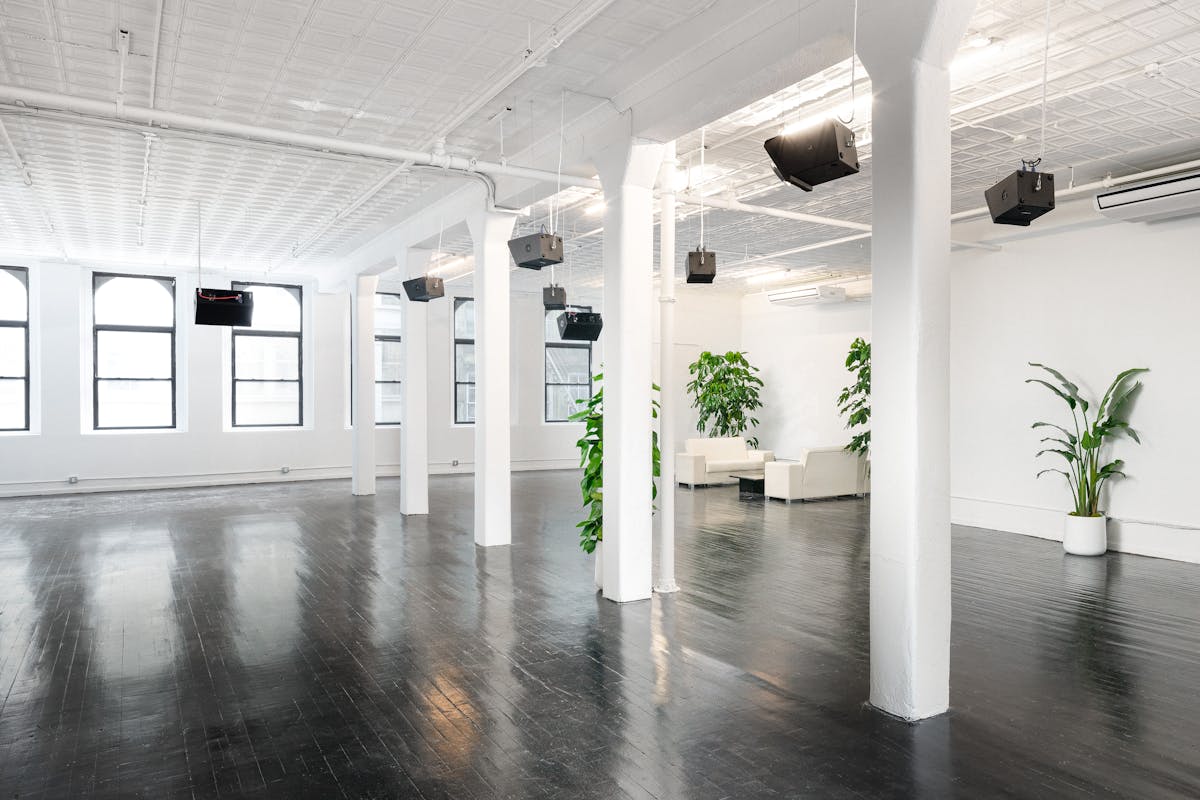
Large exhibition venues typically range from 1,000 to 10,000 square feet, though some reach much larger. A 1,000-square-foot space accommodates 200 to 400 standing guests or 50 to 100 seated; a 5,000-square-foot gallery might hold 800 to 1,500. Column-free floors are priced higher and are essential for open-plan art displays or catwalk events. Ceiling height, 12 feet or more, determines what you can hang, project or construct.
Use case matters as much as square footage. A trade show needs loading access and breakout areas for vendor booths. An art fair needs neutral walls and track lighting. A product launch may prioritize visibility, street frontage, or a specific neighborhood. Filter results by the space features and neighborhood that match your event type.
How to Approach Your Search
Start by defining your event type and guest count, then filter by neighborhood and size. Many hosts list their ceiling height, floor condition (polished, raw concrete, wood) and loading capacity in the listing details. Review those specifics before you enquire: a beautiful space with a 9-foot ceiling will not work if you need to install a 10-foot installation.
Most large exhibition spaces are available on a daily or weekly rental basis, with volume discounts for longer bookings. Availability clusters around the fashion weeks in February and September, art fair season in autumn and spring, and the holiday retail push through November and December. August is the quietest month across Manhattan and the cheapest time to secure a large venue.
FAQ
What is considered a large exhibition space?
Large exhibition spaces typically begin at 1,000 square feet and extend to 10,000 or more. The threshold depends on your event: a gallery exhibition might start at 1,500 square feet for a solo show, while a trade show or product launch often demands 3,000 to 5,000. Column-free floors and 12-foot ceilings are common features of large spaces.
Which neighborhoods are best for art exhibitions?
Chelsea is the primary hub, with gallery buildings concentrated in the West 20s. Tribeca and SoHo offer loft-style venues suited to design and photography exhibitions. The Lower East Side has smaller, more emerging-focused galleries; NoHo and the East Village carry artist communities with studio-conversion spaces.
Where should I hold a product launch or trade show?
Midtown and Hudson Yards are default locations for corporate events and large activations, offering new-build infrastructure and proximity to business travelers. Brooklyn's Williamsburg and Long Island City provide raw industrial settings at lower daily rates, ideal for tech and fashion launches aimed at younger audiences.
How far in advance should I book a large exhibition space?
During peak periods, fashion weeks in February and September, art fairs in the spring and autumn, and the December holiday push, book 6 to 8 weeks ahead. For quieter months like August or January, two to three weeks is often sufficient. Year-round, popular spaces in Chelsea and SoHo book faster than secondary neighborhoods.
What should I check when viewing a large exhibition space?
Confirm column spacing and ceiling height, check the lighting setup (track, can, grid, or bare), verify loading dock access and hours, and ask about climate control if you are displaying sensitive work. Walk the entrance and confirm it suits your guest flow and any external branding you plan.
How do I find a space for a specific use case?
Filter by neighborhood and square footage above to see available options, then review the listing details for ceiling height, column condition, and loading specs. Use the link to each neighborhood's search page below to browse exhibition spaces sorted by location.
Explore more: Art Gallery Exhibition Space For Rent · art space in New York