

British beauty brand Code8 demonstrates how a makeup pop-up store can do more than drive sales — it can build brand identity, encourage personalization and create lasting customer loyalty.
Founded by Nadine Ayache and Sophia Chikovani, Code8 was created around the philosophy that beauty should feel curated, edited and confidence-driven. As a digital-first cosmetics brand, Code8 quickly recognized that physical retail would play a crucial role in helping customers experience products in person.
If you’re exploring how cosmetic brands use temporary retail strategically, see our guide to beauty pop-up shops and successful brand examples.
Why a Physical Presence Matters for Makeup Brands
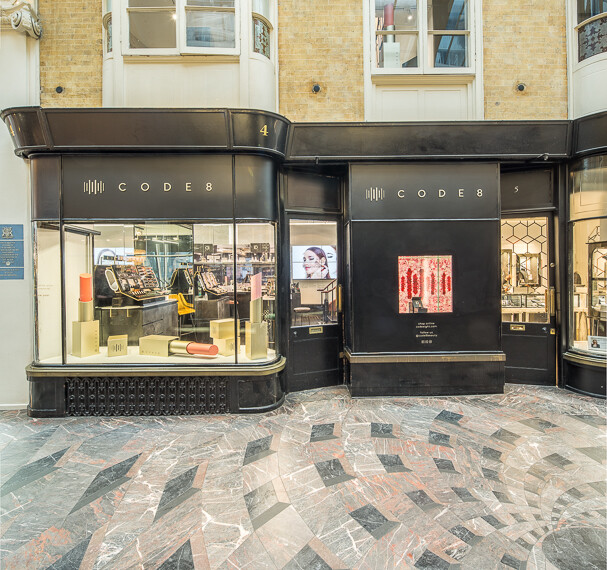
Unlike many product categories, makeup is inherently tactile. Shade matching, texture testing and personalized consultation significantly impact purchasing decisions.
For Code8, launching a beauty pop-up store in London allowed the brand to:
- Offer express makeovers
- Provide personalized consultations
- Showcase curated product “edits”
- Build direct relationships with customers
- Reinforce brand identity through physical design
Temporary retail bridged the gap between ecommerce discovery and in-person confidence.
Choosing Burlington Arcade: Positioning in London’s West End
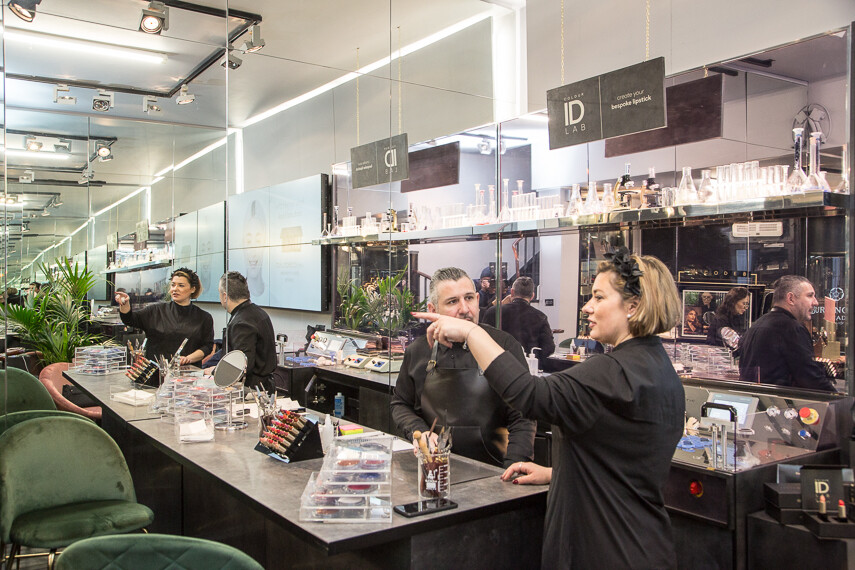
After an initial activation in Covent Garden, Code8 opened a pop-up in Burlington Arcade — located in London’s prestigious West End.
The West End is one of the strongest locations for beauty and luxury pop-up shops due to:
- High tourist and local foot traffic
- Established retail credibility
- Proximity to premium fashion brands
- Strong conversion potential
Explore available retail spaces in London’s West End:
West End Retail Spaces
More broadly, London continues to be one of the most strategic cities globally for beauty pop-up stores.
Browse pop-up store spaces in London.
Designing a Flexible, Repeatable Pop-Up Concept
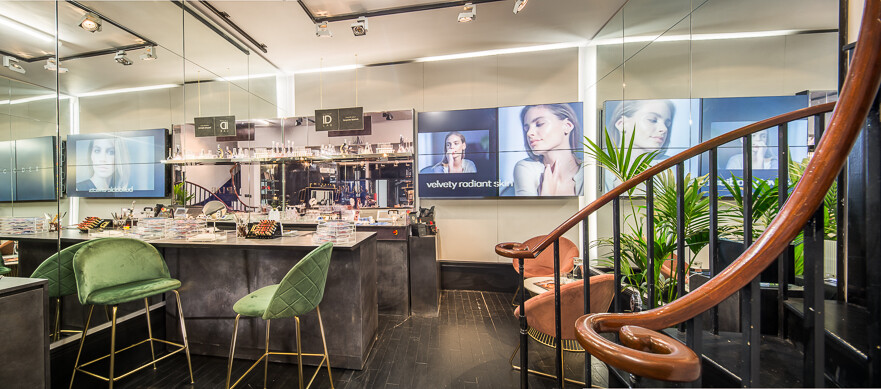
One of Code8’s strategic advantages was designing a modular pop-up format.
For brands
Popping up in London?
Explore short-term spaces in London with Storefront.
Explore London spacesWhile the Covent Garden space featured a clean white-box aesthetic, Burlington Arcade had a more townhouse-inspired environment. To maintain brand consistency across different locations, Code8 invested in mobile furniture and adaptable display elements.
This approach allowed the brand to:
- Replicate its identity across multiple pop-ups
- Reduce future build-out costs
- Maintain visual cohesion
- Scale its temporary retail strategy efficiently
For beauty brands considering recurring activations, flexibility in design can significantly improve ROI.
Conversion Through Personalization
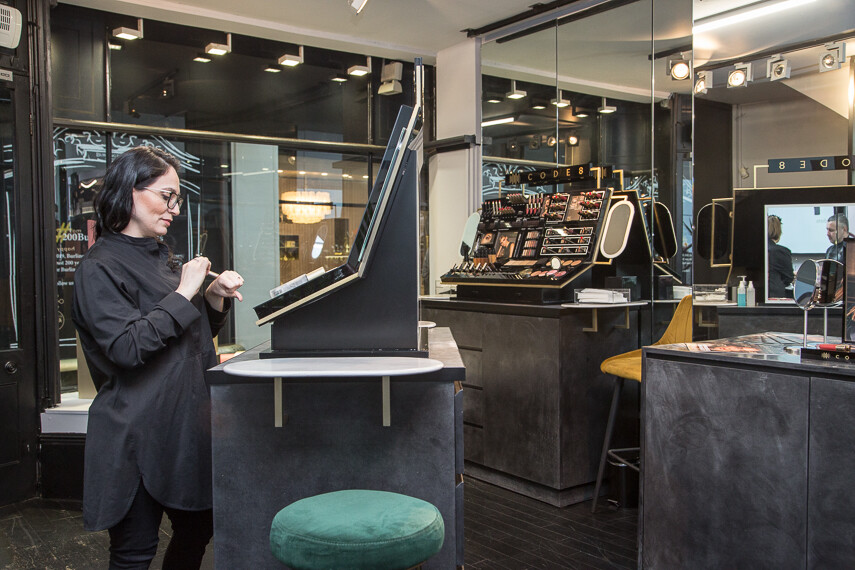
Code8’s pop-up model focused heavily on curated “edits” — pre-selected makeup themes and personalized boxes tailored to individual preferences.
Inside the pop-up, visitors could:
- Receive complimentary express makeovers
- Shop curated lip collections
- Create customized makeup edit boxes
- Engage directly with brand representatives
The result was strong in-store conversion. Once customers entered the space, they experienced the brand’s philosophy in action — making purchase decisions more intuitive and confidence-driven.
This reflects a broader trend in cosmetic pop-up stores: personalization drives performance.
Lessons for Beauty Brands Considering a Pop-Up
Code8’s London activation highlights several key strategies for emerging beauty brands:
- Use pop-ups to make digital brands tangible
- Choose neighborhoods aligned with brand positioning
- Design modular interiors for repeat use
- Prioritize consultation and personalization
- Leverage social media to guide customers to new locations
Temporary retail allowed Code8 to create a sense of movement — encouraging customers to follow the brand across locations and stay engaged digitally.
Planning a Beauty Pop-Up in London?
London’s West End, Covent Garden and surrounding areas remain prime locations for cosmetics and makeup pop-up stores. Check out How to Start a Pop-Up Shop in London: The Complete Guide.
Browse available spaces in:
Or explore global pop-up opportunities on Storefront.

Written by
Adrien Kerbrat is Chief Revenue Officer and co-founder of Storefront. With more than 10 years in commercial real estate, he is an expert on the French market and short-term retail across Europe. Based in Bordeaux and often in Paris, he writes on pop-up strategy, retail location, and the French retail landscape.
More from Adrien Kerbrat →Related posts:
 Kodak Launches Experiential Pop-Up Store in London’s Soho
 How Carlo Felice Introduced Its Luxury Womenswear With a Pop-Up Shop in Chelsea
 How Button & Wilde Used a Pop-Up Shop in Soho to Showcase Personalised Products
 How Dr. Hauschka Celebrated Its 50th Anniversary With a Pop-Up Shop in London
 How SELFNATION Used a Pop-Up Store in London to Introduce Custom-Fit Denim