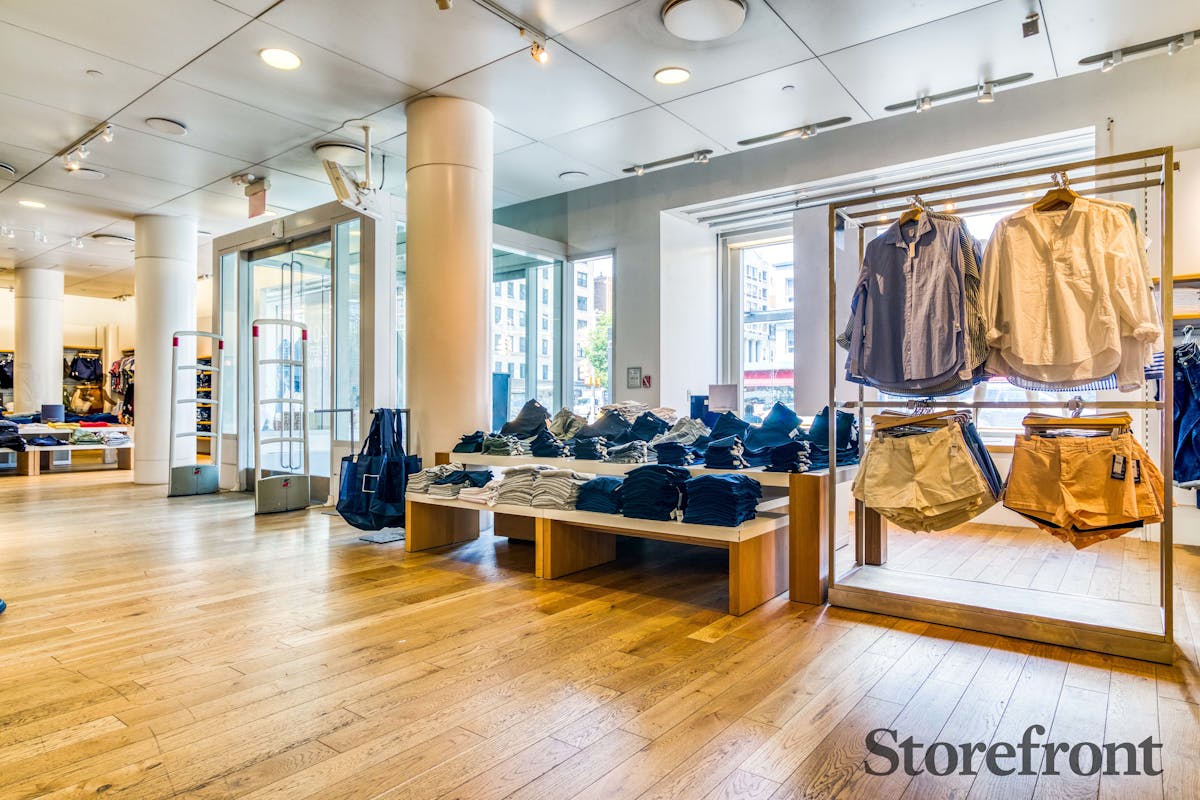
London's commercial retail stock spans an unusually wide range of building types and streets, from narrow Victorian frontages in Soho to wide-format units on Oxford Street and former warehouse ground floors in Shoreditch. The right unit depends less on the district than on the trading pattern: who the customer is, when they visit, and how far they travel. The listings on this page cover that full range, organised so you can filter by area and compare what is available before approaching a host.
Which part of London suits your retail business
The West End, covering Oxford Street, Regent Street and Piccadilly, is the busiest retail district in the United Kingdom and the address brands take for reach and visibility. Units here are large-format and the footfall is international.
Shoreditch offers wide ground-floor frontages in former warehouse buildings, with a customer that skews young and trades hardest at weekends. It is where independent labels and brand activations compete for space rather than where chains anchor.
Mayfair and Knightsbridge are the luxury addresses. Bond Street and Sloane Street are occupied almost entirely by international fashion houses and jewellers, and space there is taken for prestige adjacency alongside footfall.
Marylebone High Street, Notting Hill and Chelsea each offer a wealthy residential catchment on a managed or village-scale street, where the customer is local and deliberate rather than passing.
For a brand whose customer is Londoners rather than visitors, a Major centre such as Hackney, Camden or Fulham draws from its whole borough and trades on a different rhythm entirely. See also commercial property to let in Hackney and commercial property to let in Camden for district-specific listings.
What the units are like
London retail units are small by international standards. Outside the flagship streets and the managed centres, a typical ground-floor shop is a narrow Victorian or Edwardian frontage over one or two floors, often with a basement and limited rear access. Brands accustomed to American floorplates should expect to work vertically.
Several of London's best-known retail streets sit under single estate ownership. On those streets, lettings go through the estate rather than the open market, and the tenant mix is curated. Covent Garden, Seven Dials, Carnaby Street, Marylebone High Street and Coal Drops Yard all operate this way. The listings on Storefront are drawn from the broader market alongside these managed pockets.
Outside the central districts, London retail runs on high streets: a single named road through each area carrying the shops and restaurants for the neighbourhood around it. Naming the right high street is usually more useful than naming the borough, because a borough can be several miles across.
How to compare units across districts
Rates vary by location, size, floor level and the condition of the fit-out. A ground-floor unit with a window commands the most. A first-floor or basement unit in the same building asks less while keeping the same address and much of the same footfall.
A side street a few doors from the main run often asks materially less than the frontage itself, while keeping a significant share of the passing trade. In Soho, Fitzrovia and Notting Hill, the difference between a principal street and the lane behind it can be substantial.
A longer commitment usually earns a better rate per month than a short one. Hosts price continuity, and a brand able to commit to six or twelve months is in a stronger position than one asking for three.
For retail units across London without a district filter, retail property to let in London and retail units to let in London cover the wider set.
Seasonal demand and when to move
Demand for longer-term units in London peaks around the fashion weeks in February and September, through the run-up to Christmas, and around the autumn design and art festivals. Landlords fielding multiple enquiries at those moments are less likely to negotiate on rate or terms.
August is the quietest month across most of central London. A large share of the city leaves, office footfall drops, and landlords with a vacant unit have fewer options. For a brand with flexibility on timing, approaching in August is the most efficient way to find a well-located unit at a reasonable rate.
The West End inverts this pattern: visitor numbers peak in July and August when residents leave, so a unit on Oxford Street or in Covent Garden trades hardest in summer regardless of what is happening elsewhere in the city.
Browsing by district
The listings above cover London as a whole. If you already know the district, the selections below go straight there:
For the broadest set of London commercial listings, commercial property to let in London covers all districts.
Frequently Asked Questions
What is the difference between an A1 and an A3 premises?
A1 (shops) and A3 (restaurants and cafes) were the use classes in England until 1 September 2020, when both moved into the new Class E alongside offices and other town-centre uses. Pubs and bars, formerly A4, and hot-food takeaways, formerly A5, are not in Class E: they are sui generis and need their own permission. In practice, the terms A1 and A3 remain in wide use as shorthand for retail and food-and-drink units, which is how they appear in listings and search results.
How long are the terms on these units?
The listings on this page are suited to commitments of several months upward. The exact term is set by each host and varies by unit, location and demand. A brand ready to trade from a fixed address for six to twenty-four months will find the widest selection. Shorter occupancies are covered by other listings on the platform.
Do I need to check anything with the local authority before signing?
Requirements depend on the specific unit, its condition and the local authority. What applies to one borough or one building type may not apply to another. It is worth confirming the position directly before committing to a lease, particularly for food-and-drink uses or where external signage is planned.
Which London districts have the highest footfall for retail?
Oxford Street is the busiest shopping street in Europe, followed by Regent Street, Bond Street and Covent Garden. Shoreditch carries the highest weekend footfall among east London districts. Knightsbridge, Mayfair and Chelsea draw a wealthy residential and international visitor catchment. Outside the centre, Camden is market-led with very high visitor numbers, and Battersea has grown significantly since the power station redevelopment.
When is the best time to find a unit in London?
August is typically the quietest period for enquiries across most of central London, and landlords with a vacant unit have fewer competing approaches. The run-up to fashion week in September and the months before Christmas attract the most competition. A brand with flexibility on start date is in a stronger negotiating position by timing its approach to the quieter window.