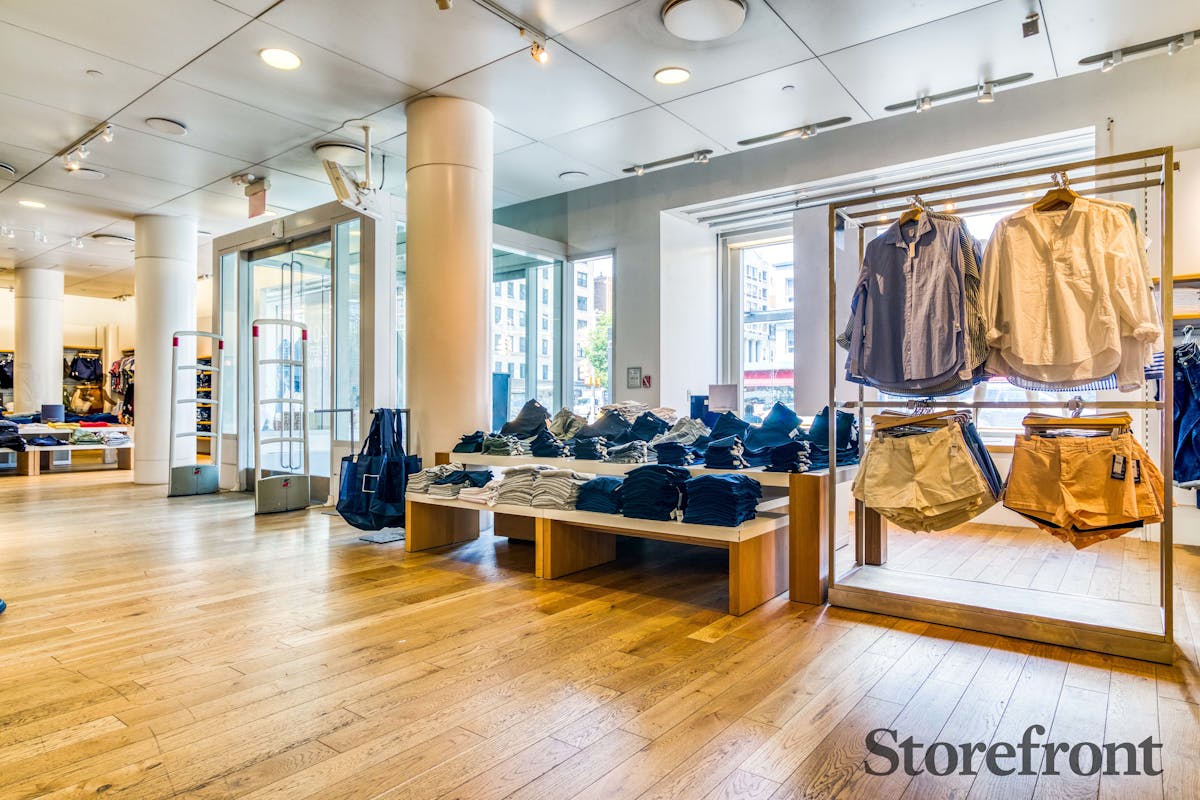
London grades its retail districts on how far they draw from: international flagships on Bond Street and Oxford Street, neighbourhood anchors in Hackney and Fulham, and the curated managed estates of Covent Garden, Seven Dials and Marylebone High Street sitting between the two. Matching the right address to the right trading format is the decision that shapes everything else, from rent to customer mix to how the unit performs across the week.
Which part of London suits your retail format
The West End, covering Oxford Street, Regent Street and Piccadilly, is taken for reach and visibility. Units here are large-format and the tenant mix is national and international chains. Bond Street is the luxury address, occupied almost entirely by established fashion houses, jewellers and auctioneers.
Shoreditch draws brand activations and independent labels to its former warehouse and light-industrial stock, with wide ground-floor frontages and raw interiors. Its customer trades hardest at weekends. For a similar independent character on a residential catchment, Marylebone High Street is deliberately managed to stay distinct from the chains to its south.
Notting Hill combines a weekend visitor draw with an affluent resident base, with retail concentrated around Portobello and Westbourne Grove. Camden is market-led, with very high visitor numbers and small-unit retail. Chelsea's retail runs along the King's Road and Sloane Street, serving a wealthy local catchment with deliberate rather than passing trade.
For district-specific options, browse commercial property to let in Shoreditch, Mayfair, Marylebone, Soho, Covent Garden, Chelsea, Knightsbridge or Notting Hill.
What London retail units are actually like
Outside the flagship streets and managed centres, a typical London retail unit is a narrow Georgian or Victorian shopfront over one or two floors, often with a basement and limited rear access. Brands used to American floorplates should expect to work vertically rather than horizontally.
Several of London's best-known retail streets sit almost entirely under single estate ownership, Regent Street, Carnaby, Covent Garden, Seven Dials and Coal Drops Yard among them. On an estate-managed street the tenant mix is curated and lettings go through the estate rather than the open market.
South of the river, London trades on its own high streets rather than feeding into the centre. Northcote Road in Battersea and Lordship Lane in Dulwich both serve strong local catchments. For options in those areas, the Battersea listings are a good starting point.
Pricing for retail property to rent in London
Rates are quoted per month on the listings below. Rates vary by location, unit size, frontage and the trading hours of the surrounding area.
The ranges above come from current London listings; final terms are agreed directly with the host.
When to look and what drives London's retail calendar
Demand for retail property across London peaks around the fashion weeks in February and September, through the run-up to Christmas, and around the autumn art and design festivals. The London Design Festival brings citywide demand for showroom and retail space across Shoreditch, Mayfair, Clerkenwell and Bankside each September. Frieze London in October adds collector and gallery activity across the city.
August is the quietest month for the neighbourhood high streets, when residents leave and footfall drops, though the West End runs in the opposite direction and is at its busiest with visitors through July and August. The Christmas trading run begins with Black Friday in November and extends through Boxing Day on 26 December, one of the highest-footfall trading days of the year.
For a broader view of what is available across the city, the retail units to let in London and commercial property to let in London selections cover the full range.
North versus south, and how London's geography shapes retail
The great majority of London's retail and office concentration sits north of the Thames. South London trades on its own high streets: Richmond, Northcote Road in Battersea, Lordship Lane in Dulwich. A brand choosing between the two is choosing between city-wide reach and a resident catchment.
Postcodes do not follow district boundaries exactly, so a search by code and a search by district name will not return an identical set of addresses. A unit described as being in one district may carry the postcode of the one next to it. The listings here are indexed by district, so browsing by area gives a more reliable picture than searching by postcode alone.
For Camden, see commercial property to let in Camden; for Hackney, commercial property to let in Hackney covers that borough's independent retail base.
Frequently Asked Questions
What is the difference between retail property to let and a pop-up space in London?
Retail property to let in London is typically taken on terms of three months or longer, with the occupier trading from the unit as a going concern. The commitment, fit-out and operational setup are different from a short booking. The listings on this page are for brands looking to trade from a fixed address over a sustained period.
Which London districts have the most retail property available?
The widest range of ground-floor retail units sits in the West End, Shoreditch, Marylebone, Notting Hill and the managed estates of Covent Garden and Seven Dials. Each district draws a different customer: the West End for reach and volume, Shoreditch for an independent and brand-activation audience, Marylebone for an affluent village feel.
How much does retail property to rent in London typically cost?
Each listing below carries its own monthly asking rate. Rates vary by district, unit size and frontage. Final terms are negotiated directly with the host and depend on duration and exclusivity.
Are there managed estates in London where retail lettings work differently?
Yes. Several of London's best-known retail streets, including Regent Street, Carnaby, Covent Garden, Seven Dials and Coal Drops Yard, are largely under single estate ownership. On those streets, the tenant mix is curated and lettings go through the estate rather than the open market, so availability and the application process are different from a privately owned unit.
Does London's geography affect which retail district is right for a brand?
Significantly. The great majority of London's retail concentration sits north of the Thames. The West End draws international visitors; the neighbourhood high streets draw residents. The right district depends on whether the brand is targeting city-wide reach or a specific local catchment, and on how footfall splits across the week in that area.