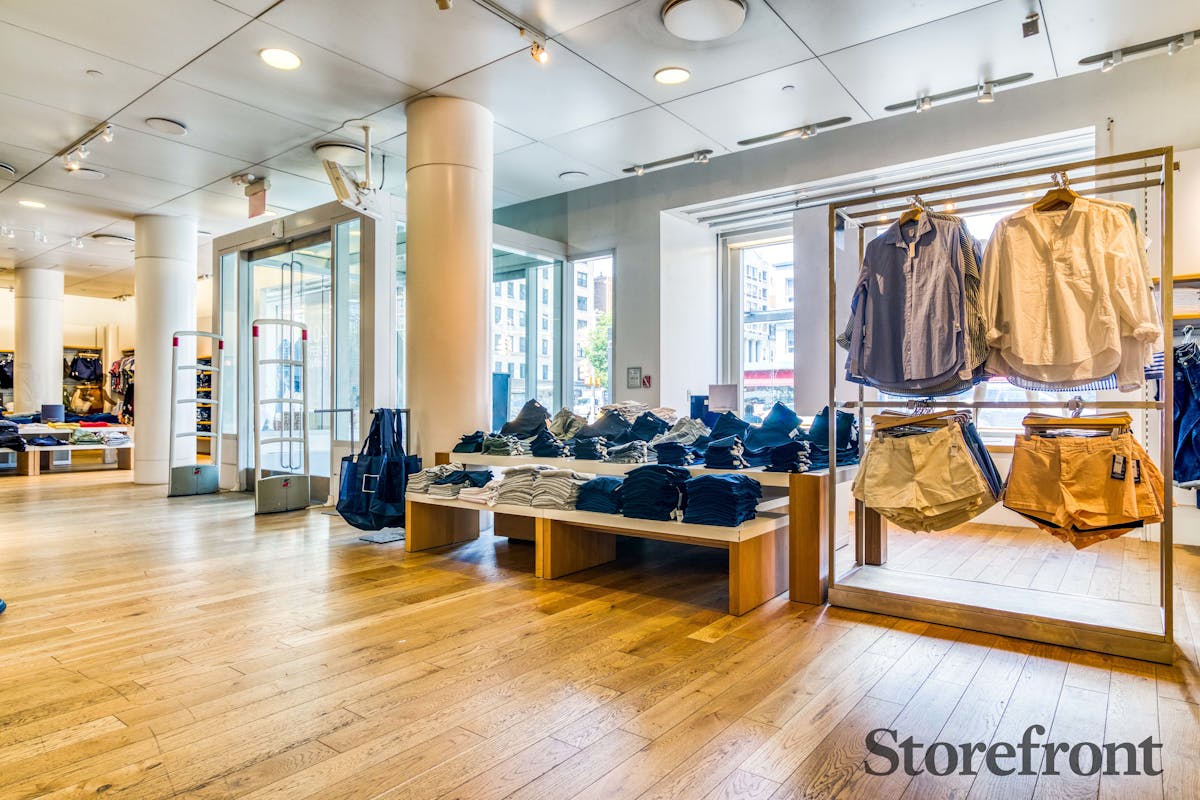
Commercial property in Soho sits at one of London's most recognised addresses. The W1 postcode places a brand inside one of only two areas the London Plan designates as an International centre, alongside Knightsbridge, meaning the footfall here draws from across the city and from international visitors. Units are small by London standards: a typical ground-floor shop is a narrow frontage over one or two floors, often with a basement, and brands used to larger floorplates will work vertically rather than horizontally. That scale is part of the character, and it suits labels and concepts that want presence in a working, layered neighbourhood rather than a purpose-built shopping destination.
The Soho retail mix
Soho's commercial stock is genuinely mixed. Media and post-production offices occupy the upper floors, while ground level carries bars, restaurants and independent retail across its tight street grid. The managed pedestrian quarter around Carnaby Street and the lanes behind it holds small units let through a single estate, with a tenant mix weighted towards fashion and food. Broadwick Street and Berwick Street run through the centre of the neighbourhood, and Berwick Street's long-running street market gives the area a daytime rhythm distinct from the evening and late-night trade that dominates Old Compton Street. Greek Street and Frith Street run north from Shaftesbury Avenue and carry restaurants and small ground-floor units on narrow frontages. Kingly Court behind Carnaby Street holds small managed units across three levels, used regularly for brand space. For brands looking at the managed estate route specifically, units on those streets often go through the estate rather than the open market.
For a broader view of what is available across the district, retail property to let in London and retail units to let in London cover the wider city.
What Soho suits, and what it does not
Soho fits a brand that wants a characterful, recognisable London address without the flagship scale of Oxford Street or Regent Street. Oxford Street runs large-format units let to national and international chains; Regent Street carries curated flagship-scale lettings on a uniform estate. Soho is neither of those, and that is its commercial value: the neighbourhood has its own identity, and a unit here reads differently from one on either of those streets.
The neighbourhood is less suited to formats that need very large floorplates, straightforward delivery access or a pure shopping rhythm. The street grid is tight, footfall has an evening and residential weight as well as a daytime one, and the mix of uses means the trading environment is layered. A brand whose customer is a West End visitor will find the address works; a brand whose format depends on a clean, high-street flow may find Covent Garden or Carnaby Street a closer match. Commercial property to let in Covent Garden and the Carnaby Street selection are both available if the fit is better there.
Getting to Soho
Soho is served by Oxford Circus, Piccadilly Circus and Tottenham Court Road stations, all within a short walk of the neighbourhood. Tottenham Court Road is one of the five busiest stations in London by annual entries and exits, and that through-traffic translates directly to ground-floor footfall on the streets closest to it. Delivery and fit-out scheduling in central London is worth planning around the Congestion Charge operating hours and the Ultra Low Emission Zone, both of which apply to this area.
Timing and demand
Demand for commercial property in Soho runs at a consistent level through the year, with the most competitive periods around London Fashion Week in September and the run-up to Christmas. London Design Festival, which runs across the city in September, brings additional footfall to the neighbourhood during the same window. Frieze London in October adds collector and gallery activity across the West End. August is the quietest month for office footfall in the area, though the visitor season peaks then, which inverts the usual pattern: the West End stays busy when the neighbourhood high streets quiet down.
Black Friday marks the start of the Christmas trading run, and Boxing Day opens the winter sale period, one of the highest-footfall trading days of the year in the United Kingdom. Both are worth building into a letting timeline for any brand planning a Christmas presence.
Rates and what shapes them
Soho sits well above the asking rates seen across most of the rest of London. The address commands a premium, and that applies across unit types and street positions. The levers that influence what a specific unit costs are consistent: a side street a few doors off the main run asks less than the main run itself while keeping much of the passing trade; a first floor or basement unit in the same building asks less than the ground-floor frontage; a raw, unfitted unit costs less than a finished one; and a term agreed with flexibility on start date, when a landlord has a gap to fill, tends to produce a better outcome than a fixed-date commitment.
Duration also matters. A longer term of several months generally earns a better rate per period than a shorter one, and Soho landlords on the managed estates tend to favour tenants who can fill a unit for a meaningful stretch rather than a brief window. For brands considering other neighbourhoods at a different point in the cost curve, commercial property to let in Fitzrovia and commercial property to let in Hackney are worth comparing.
Frequently Asked Questions
What kind of units are available as commercial property to let in Soho?
Soho's commercial stock is predominantly small-format ground-floor units on narrow Victorian and Georgian frontages, often with a basement and upper floors. The managed estates around Carnaby Street and Kingly Court also offer units across multiple levels. Large-format retail is not the norm here; the neighbourhood suits compact, characterful brand spaces.
How does Soho compare with nearby West End retail areas?
Oxford Street and Regent Street carry large-format, chain-oriented lettings and curated flagship estates respectively. Soho is smaller in scale, more mixed in use, and has a distinct neighbourhood identity. Covent Garden and the Carnaby estate sit between the two in character. The right choice depends on the brand's format, audience and the trading rhythm it needs.
When is the best time to let commercial premises in Soho?
Demand peaks around London Fashion Week in September, through the Frieze art week in October, and in the run-up to Christmas. August is the quietest period for the area's office population, though visitor footfall remains strong. Brands with flexibility on timing often find better availability and terms outside those peak windows.
Is Soho well connected for customers and deliveries?
Soho has three underground stations within walking distance, and Tottenham Court Road is one of the busiest stations in the network. Customer access is straightforward. Deliveries and fit-out in central London require planning around the Congestion Charge and Ultra Low Emission Zone, both of which apply to this area.
What other London areas should a brand consider alongside Soho?
Carnaby Street and the Newburgh Quarter are immediately adjacent and part of the same managed estate. Covent Garden, Fitzrovia and Mayfair each offer a different character and price point in the West End. Shoreditch and Hackney suit brands whose audience is east London rather than the centre. All are available to browse on Storefront.