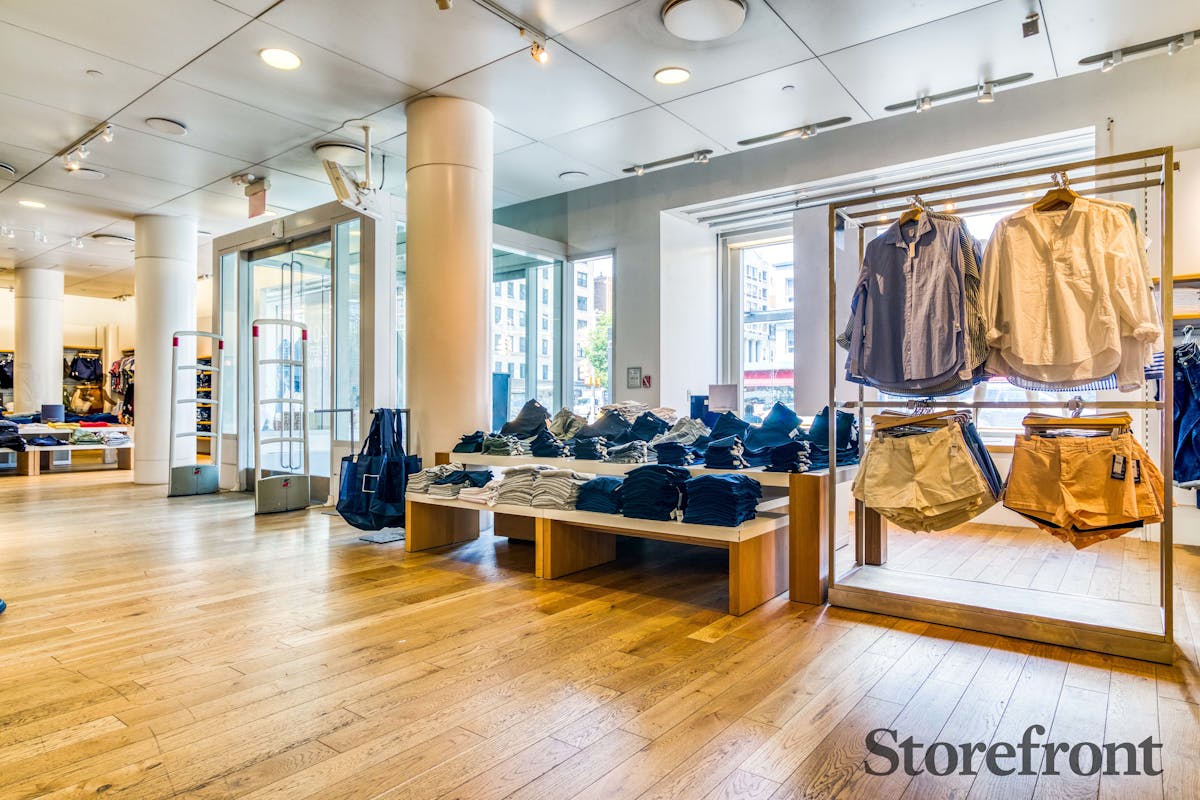
London's retail geography divides into three broad tiers. The flagship streets, Oxford Street, Regent Street, Bond Street and Sloane Street, are taken for reach and international visibility, with large-format units and the tenants to match. The managed estates, Covent Garden, Carnaby, Seven Dials and Marylebone High Street, curate their tenant mix and sit between the two extremes. Independent and emerging labels gravitate to Shoreditch, Dalston, Hackney and the smaller streets of Notting Hill. Knowing which tier your brand belongs in is the first decision; the listings below cover all three.
What the stock looks like
Outside the flagship streets and the managed centres, a typical London retail unit is a narrow Georgian or Victorian shopfront over one or two floors, often with a basement and limited rear access. London units are small by international standards, and brands accustomed to larger floorplates should expect to work vertically. The managed estates, including Covent Garden and Carnaby Street, offer curated small units where the tenant mix is controlled by the estate rather than the open market. Commercial property to let in Covent Garden covers that district. Shoreditch is different: its former warehouse and light-industrial buildings give wide ground-floor frontage and raw interiors, which is why it draws brand activations and independent labels rather than conventional high-street operators. Commercial property to let in Shoreditch covers that stock separately.
Districts and what they suit
The West End, covering Oxford Street, Regent Street and Piccadilly, is the busiest retail district in the United Kingdom. Units there are large-format and taken for visibility rather than a neighbourhood catchment. Mayfair is the luxury address: Bond Street and the streets around it are occupied almost entirely by established fashion houses, jewellers and art dealers, and space is taken for prestige adjacency as much as for footfall. Commercial property to let in Mayfair covers that end of the market.
For brands whose customer is Londoners rather than visitors, the neighbourhood high streets are frequently the better trade. Marylebone High Street is managed as an independent-leaning run, deliberately distinct from the chains immediately to its south. Commercial property to let in Marylebone covers units there. Chelsea's King's Road is a long continuous run of shopfronts serving a wealthy residential catchment. Commercial property to let in Chelsea covers that area.
Notting Hill combines a strong weekend visitor draw with a wealthy resident catchment, with retail concentrated around Portobello Road and Westbourne Grove. Commercial property to let in Notting Hill covers units in that district.
Rates and what shapes them
Rates are quoted per month on the listings below. Rates vary significantly by location: a unit in Mayfair or Knightsbridge sits at a different level from one in Hackney or Battersea, and the street within a district matters as much as the district itself. Commercial property to let in Knightsbridge and commercial property to let in Fitzrovia illustrate how much the location shapes the number.
Rates above are asking figures from the listings on this page; final terms are agreed directly with the host.
Seasonality and when to commit
Demand for retail units in London peaks around the fashion weeks in February and September, through the run-up to Christmas, and around the autumn art and design festivals. Frieze London, held each October in The Regent's Park, brings gallery and collector activity across the city. The London Design Festival runs across the city for around nine days each September, generating demand for retail and showroom space in Shoreditch, Mayfair, Clerkenwell and Bankside in particular.
August is the quietest month for the neighbourhood high streets, when residents leave and office footfall drops, though the West End runs in the opposite direction: visitor numbers peak in July and August, making it the strongest period on Oxford Street and Regent Street and a weaker one in Hackney or Fulham. The Christmas trading run in the United Kingdom starts from Black Friday, with Boxing Day on 26 December opening the sale period. A brand committing to a unit from autumn through to January covers the most commercially active stretch of the London retail year.
North and south of the river
The great majority of London's retail and office concentration sits north of the Thames. South London trades on its own high streets rather than feeding into the centre, and a brand choosing between the two is choosing between reach and a resident catchment. Battersea has changed quickly, with the power station redevelopment adding a large managed retail destination alongside the established retail of Northcote Road. Commercial property to let in Battersea covers units in that part of the city.
Canary Wharf is a privately managed financial district where footfall is office-driven, weekday and predictable. Commercial property to let in Canary Wharf covers that stock. For brands whose priority is an independent, creative customer base, east London, including Hackney and Shoreditch, remains the stronger address. Commercial property to let in Hackney covers units across that borough.
Frequently Asked Questions
What is a retail unit to let in London?
A retail unit to let is a ground-floor commercial space available on a tenancy agreement, typically taken by a brand or retailer to trade from over a period of months. In London these range from narrow Victorian shopfronts on neighbourhood high streets to large-format flagship units on Oxford Street or Regent Street.
How much does a retail unit to let in London cost?
Each listing below carries its own monthly asking rate. Rates vary considerably by location, unit size and the term agreed. Final booking terms are negotiated directly with the host.
Which London districts have the most retail units available?
The highest concentration of available retail units sits in the West End, Shoreditch, Marylebone and the managed estates of Covent Garden and Carnaby. Neighbourhood high streets across Camden, Notting Hill, Chelsea and Battersea also carry available stock, at rates below the central flagship streets.
What terms are retail units in London let on?
Most retail units listed here are available on terms of three months or more. The exact term, rent-free period and deposit requirements are set by the individual landlord and vary by unit and location. Requirements should be confirmed with the host before committing.
Is demand seasonal for retail units in London?
Yes. Demand peaks around the fashion weeks in February and September, through the autumn festival season and in the run-up to Christmas. August is the quietest period for the neighbourhood high streets, though the West End and tourist-facing areas remain active. Brands planning to open before the Christmas trading period typically commit in early autumn.