Commercial premises to let in Notting Hill trade on two things at once: the affluent residents who live here and the crowds that arrive each weekend for the market. Those two audiences arrive together on Saturdays, which is the defining trading day in this part of London. For a brand taking space on a term of several months, that weekly rhythm shapes everything from staffing to the window display. The units here are small by the standards of a flagship street, set in listed stucco-fronted terraces inside a conservation area, and that setting is part of the commercial proposition.
The streets and what they offer
Portobello Road holds the best-known antiques and street market in London, and the retail on the street is shaped by it. Westbourne Grove and Ledbury Road carry the design-led side of Notting Hill retail, with small units in independent fashion, beauty and homeware. Golborne Road at the northern end of Portobello runs a smaller antiques market alongside a Moroccan and Portuguese food trade, and rents there sit below those on the streets to the south. Holland Park Avenue and Clarendon Cross offer quieter, more residential frontages, away from the market crowds. Kensington Church Street, running south toward Kensington High Street, holds a long-established antiques trade on narrow frontages. Notting Hill Gate station is among the hundred busiest in London by annual footfall, which gives a useful measure of the through-traffic a ground-floor unit here can expect.
For brands comparing districts across west London, commercial property to let in Chelsea and commercial property to let in South Kensington are nearby alternatives with different retail characters.
What the units look like
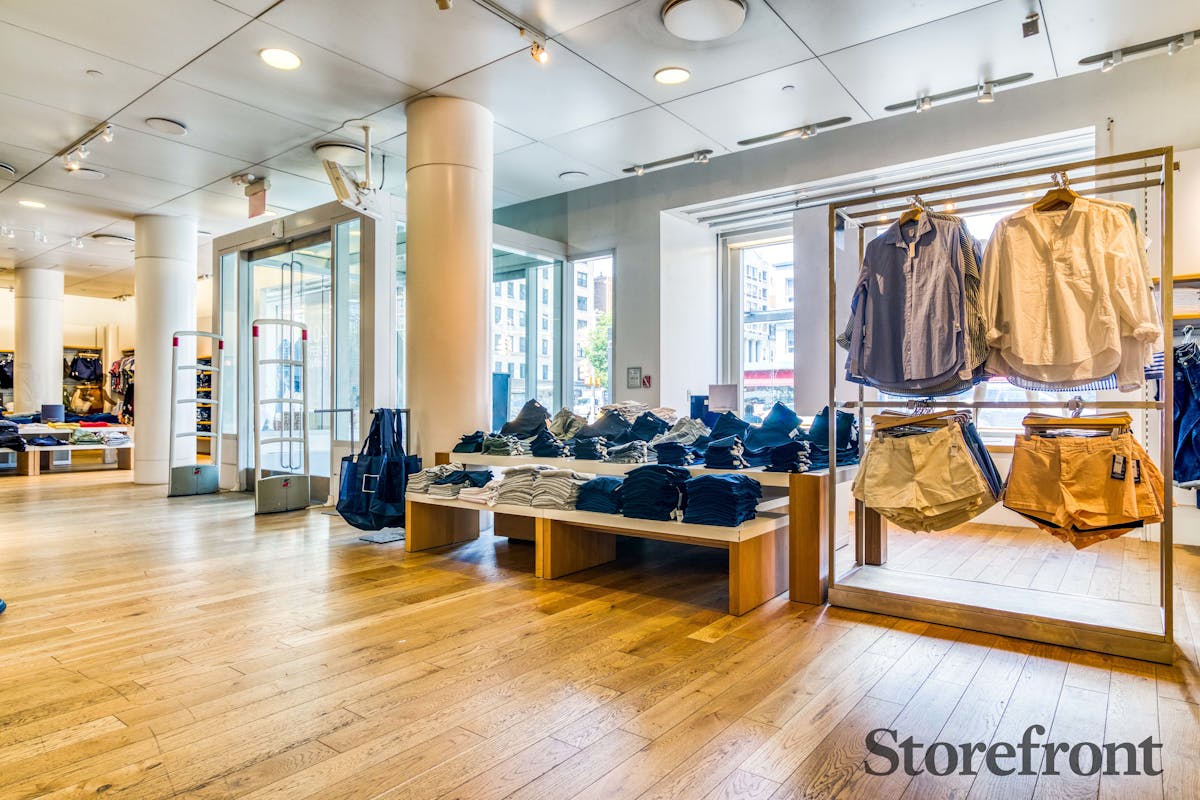
London retail units are small by international standards, and Notting Hill is no exception. Outside the managed flagship streets, a typical ground-floor shop here is a narrow Victorian or Georgian frontage over one or two floors, often with a basement and limited rear access. The conservation area status and listed building designations that apply to much of W11 mean the frontages that make the area photograph well are the same ones that cannot be materially altered. Brands used to larger floorplates should expect to work vertically. The look of the unit is a genuine asset here, and many fashion, beauty and homeware brands take space in Notting Hill precisely because the setting itself forms part of the brand photograph.
Rates and terms
Rates are quoted per month on the listings below. Rates vary across the city depending on the street, size and location, and Notting Hill units will sit within that range according to their specific position and condition.
The rates above are London-wide asking figures rather than a Notting Hill quote; final terms are agreed directly with the host.
When demand is at its highest
Demand for commercial property in Notting Hill peaks in the run-up to Christmas and around the London Design Festival in September, when showrooms and studios across the city open to the public. London Fashion Week in September also draws international buyers and press to the city, lifting enquiries across the west London retail streets. Notting Hill Carnival, held over the August bank holiday weekend, closes streets across the area completely: for a unit on or near the route it is either the busiest weekend of the year or one that requires the shutters up, and there is no middle ground. August is otherwise the quietest month for the area's residential retail, picking up again as the school year begins in early September.
Other London districts to consider
Notting Hill is one part of a wider London retail picture. Brands comparing options across the city can browse commercial property to let in Mayfair, commercial property to let in Marylebone, or retail property to let in London for a city-wide view. For the full range of retail units to let in London, the city-wide listings cover every district from Hackney to Knightsbridge.
Frequently Asked Questions
What kinds of commercial premises are available to let in Notting Hill?
Units in Notting Hill are typically narrow ground-floor shops in Victorian or Georgian terraces, often with a basement and one or two upper floors. They are concentrated on Portobello Road, Westbourne Grove, Ledbury Road and the surrounding streets. Many buildings are listed or sit inside a conservation area, so the frontages are largely fixed in character.
What does commercial property to let in Notting Hill typically cost?
Each listing below carries its own monthly asking rate. The specific rate for a Notting Hill unit depends on its street, size and condition. Final terms are agreed directly with the landlord or host.
Is Saturday trading important for a Notting Hill unit?
Saturday is the defining trading day in Notting Hill. The Portobello Road market draws crowds along the whole street and into the surrounding area, and the gap between Saturday and the rest of the week is wider here than in most other London districts. A unit that does not trade on Saturdays is, commercially, a different proposition.
What is the postcode for Notting Hill commercial property?
The main postcode covering Notting Hill is W11. Postcodes do not follow district boundaries exactly, so a unit described as being in Notting Hill may occasionally carry an adjacent code, and a search by postcode alone will not always return the same set of addresses as a search by district name.
How does Notting Hill compare with other west London retail districts?
Notting Hill sits between the managed flagship streets of Kensington and the more residential retail of Holland Park. It draws a wealthier resident catchment than Shoreditch or Hackney and a stronger weekend visitor crowd than Marylebone. The units are smaller and the setting more residential than the West End, which suits brands whose customer is a Londoner rather than a tourist.