

Paris is organized into twenty arrondissements that spiral outward from the centre, and almost every guide to opening here starts by explaining that system. It is worth knowing, but on its own it will not help you choose, because Paris does not trade by arrondissement. It trades by street.
Two units in the same arrondissement, four minutes apart, can have entirely different footfall, entirely different customers and entirely different rent. If you do not know the city, that is the single most important thing to internalize before you start looking, because it changes what you are actually shortlisting.
This page covers how to narrow down, what each of the main retail areas is actually good for, and how to check a specific address rather than trusting a reputation. If you want to look at real spaces while you read, browse pop-up shops for rent in Paris.
The city has its own ranking of its streets
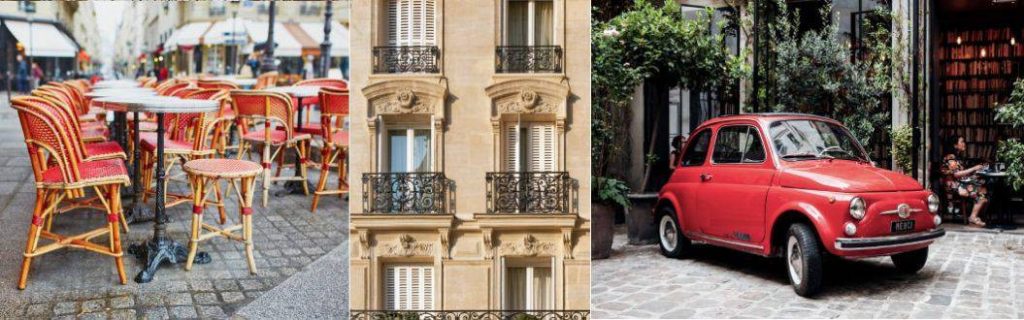
This is not a figure of speech. The City of Paris grades its streets into five commercial categories, and uses that grading to set the fee charged for occupying public land outside a shop. So Paris maintains an official commercial ranking of its own streets, independent of what the market charges in rent.
You cannot read rent off that grading, and a well-placed address is not necessarily in the top category. But it is a useful corrective to the idea that a postcode tells you what you need to know. The city itself works at street level, which is a strong hint about where your own attention should go.
There is a second street-level rule worth knowing. The Paris local plan protects retail street by street as a matter of law. On a street carrying a linéaire de protection du commerce et de l’artisanat, the use of a ground-floor unit on the street frontage cannot be changed, so a shop cannot become housing or, depending on the level, an office. For a pop-up this usually works in your favor, because it protects the supply of ground-floor retail on exactly the streets you want. It becomes relevant if you are looking at a unit that is not currently a shop. Those protection lines are published as open data by the City, though the City notes the data carries no regulatory force and the binding version sits on the official planning portal.
Start from your audience, not from the map
The question that narrows Paris fastest is not “where is good” but “who am I trying to reach, and where are they already walking”. Three broad answers, and they point to very different parts of the city.
Fashion, design and a brand-literate audience
The Marais, spanning the 3rd and 4th, is the default for a reason: dense independent retail, high weekend footfall, and a visitor who is there to browse rather than to complete an errand. Rue des Rosiers and the streets around it have shifted heavily toward clothing over the last decade. It is competitive and it is not cheap, and a bad unit in the Marais will still underperform a good unit elsewhere.
Saint-Germain-des-Prés in the 6th is the quieter, more established version of the same idea. Higher spend, older customer, less foot traffic but more intent. Good for premium and considered products, less good for anything that needs volume.
Luxury and high-ticket
The 8th, and specifically the Triangle d’Or and the Champs-Élysées, is where the international luxury audience is. It is the most expensive way to buy footfall in Paris and it makes sense for a narrow set of brands. If your price point does not support it, the traffic will not save you.
Creative, experimental and younger
The 10th around Canal Saint-Martin, and the 11th, trade on a different logic: lower rent, a local and younger audience, and a tolerance for concepts that would look out of place further west. Good for testing, for community-led activations and for brands whose story matters more than their adjacency to a luxury house.
Montmartre and the 18th add heavy tourist footfall to that, which cuts both ways depending on whether tourists are your customer.
Volume and transit
Around Opéra and the major stations you are buying sheer numbers rather than a specific audience. That suits products with broad appeal and a quick decision, and suits considered purchases badly.
For brands
Popping up in Paris?
Explore short-term spaces in Paris with Storefront.
Explore Paris spacesFor spaces of this kind, see our selection of small stores and boutique spaces in Paris.
How to check a specific address
Once you have a shortlist, reputation stops being useful and the address itself takes over. Five checks worth doing on each one.
- Stand outside it. If you or someone you trust can be in Paris, do this at the times your pop-up will actually be open. Weekday lunchtime and Saturday afternoon are different cities.
- Look at which way people are walking. Footfall past a door is not the same as footfall toward it. Being on the wrong side of a junction is a real and invisible cost.
- Look at the neighbors. Adjacent retail tells you the customer better than any area description. A unit between two nail bars and a unit between two independent fashion stores are in different businesses.
- Ask about Sunday. Sunday opening in France runs on derogations rather than the retailer’s choice, and Paris has zones where it is permitted. It is settled address by address. If your commercial case needs Sunday, establish it before committing.
- Ask what the unit already holds. Its safety classification, whether it carries an accessibility derogation, and what is permitted on the pavement outside. A landlord who knows their unit will have these answers.
The mistake worth avoiding
The most common error is choosing the most famous area the budget will stretch to, and taking the weakest unit in it. A strong unit in the 11th will almost always outperform a poor unit in the Marais, because at street level the 11th unit is on a better street than the Marais one.
If the choice is between area prestige and unit quality, take unit quality. The customer standing outside does not know which arrondissement they are in.
Once you have an area in mind, look at what is actually available: pop-up shops for rent in Paris. For what each area costs, read what a Paris pop-up costs, and for the rules attached to an address, permits, leases and what to check before you sign.

Written by
Nicholas Roberts-Moore is Chief Marketing Officer at Storefront, based in London. He specializes in AI-powered marketing and the UK retail and real estate markets, helping brands turn short-term retail into measurable growth. A former journalist, he writes on pop-up strategy, retail trends, and the future of physical retail.
More from Nicholas Roberts-Moore →If that is the shape of space you need, browse small retail spaces in Paris.
Related posts:
 What is a pop-up shop? Everything you need to know to try short-term retail
 How to Set Up a Pop-Up Art Gallery: 8 Steps to Renting and Launching Your Exhibition
 Offline Marketing Ideas for Pop-Up Shops
 The 5 Types of Pop-Up Shops (With Examples) & How to Choose the Right One
 Automotive Pop-Up Shops: How Car Brands Use Temporary Showrooms to Launch, Test and Sell