We use cookies and similar technologies to track your activity and improve your experience.
Sort by
Recommended
See on map
Top Space

Art Gallery
∙
Notting Hill
570 sq ft
from £515 per day
Top Space
4.76(8)
See on map
Advertisement Space
∙
Greater London
10 sq ft
from £1,200 per day
See on map

Unique Space
∙
Greater London
1,300 sq ft
from £2,640 per day
See on map
Art Gallery
∙
Greater London
600 sq ft
from £480 per day
Pop-Up Shop for Rent on Portobello Road, London
Check our latest articles:
7 Case Studies That Prove Experiential Retail Is the Future;What Is a Pop-Up Shop? Definition, Costs & How It Works
Short-term retail on Portobello Road
Portobello Road runs through the heart of Notting Hill and holds the best-known antiques and street market in London. The market trades hardest on Saturdays, and that weekly cycle shapes the permanent retail along the road. A pop-up shop on Portobello Road puts a brand directly inside that cycle, with rental periods running from a single day up to several months.
The road changes character along its length. The southern end carries antiques. The middle section spans fashion and lifestyle retail. The northern stretch around Golborne Road holds a Moroccan and Portuguese food trade and a smaller antiques market on noticeably lower rents. Knowing which section suits a brand matters, because each draws a different crowd.
For broader options in the surrounding area, browse retail space in Notting Hill or explore Portobello Road spaces across all use cases.
Why Portobello Road works for a pop-up store
Portobello Road's strength for a pop-up store is the built-in audience the market creates every Saturday. Brands do not need to generate their own foot traffic on the busiest day of the week: the market does it. That makes the street especially effective for retail concepts built on discovery rather than destination shopping.
The shopfronts are small, brightly painted, and mostly set in conservation-area terraces. On market days the stalls stand directly in front of them, which changes the sightline to a unit completely. A frontage that reads well midweek can be partly hidden on Saturday. Brands should factor that into how they plan signage and window displays.
The affluent resident catchment and the weekend market crowd arrive together on Saturdays, and the streets themselves are a backdrop brands want photographed. That visual quality is a different reason to take a unit than footfall alone, and it suits fashion, beauty and homeware launches looking for a setting rather than just volume.
Saturday trading and seasonality
Saturday is the trading day in Notting Hill, and the gap between it and the rest of the week is wider here than in most London neighbourhoods. Portobello Road at full market draws crowds along the whole run; the same street midweek is a quiet residential parade. A short let that does not include Saturdays has bought a different place.
Three seasonal peaks stand out for short-term retail:
-
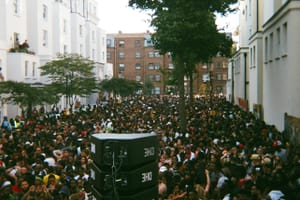
Notting Hill Carnival, held over the August bank holiday weekend, is Europe's largest street festival. It draws crowds across Notting Hill and Ladbroke Grove and closes the area completely. For retailers on the route it is either the biggest weekend of the year or a weekend to board up.
-
The November to December holiday season lifts Saturday footfall further and weekday traffic picks up as Christmas shopping begins. Boxing Day on 26 December opens the winter sale period and is one of the highest-footfall trading days of the year.
-
Spring and early summer, from April to June, brings rising visitor numbers and longer daylight hours that extend browsing time on the street.
Aligning rental dates with these peaks improves the return on a short let. Booking midweek-only periods is a practical way to reduce costs when a concept does not depend on Saturday market traffic.
How brands use a pop-up shop on Portobello Road
The street's visual character and its concentration of independent retail make it a strong fit for several pop-up formats:
-
Fashion and streetwear labels use Portobello Road to test new collections or run limited drops. The indie retail identity means shoppers expect to find something they have not seen elsewhere, which suits emerging labels and direct-to-consumer brands launching in London for the first time.
-
Lifestyle and homeware brands use the design-conscious audience to trial products in a physical setting. The nearby streets of Westbourne Grove and Ledbury Road carry small units taken by independent labels and homeware brands, reinforcing that positioning.
-
Food and beverage brands align with market days for sampling activations or branded pop-up stands. The high Saturday footfall creates a natural testing environment for new products.
To see how pop-up store rental works across the platform, the project page explains the process from listing to booking.
Portobello Road compared to other London retail streets
Portobello Road occupies a distinct position in London's short-term retail landscape. The market creates a built-in audience that most other streets cannot match on volume during weekends.
Compared to Oxford Street and the West End, which serve mass-market destination shopping, Portobello Road trades on curation and character. Shoppers here are browsing, not heading to a specific store.
Compared to nearby Westbourne Grove and Ledbury Road, which hold established designer boutiques in small listed frontages, Portobello Road is more accessible for emerging brands and experimental retail formats.
Against retail space in London more broadly, the street's combination of a heritage market, a wealthy resident catchment and strong weekend visitor numbers gives it a profile that newer retail districts do not replicate. Brands comparing neighbourhoods can also look at Marylebone for a quieter high-street setting or Kings Cross for a managed-estate environment.
Transport and nearby landmarks
Notting Hill Gate station sits at the southern end of Portobello Road and is among the hundred busiest stations in London by annual entries and exits. That is a useful proxy for the through-traffic a ground-floor unit here can expect. Ladbroke Grove station serves the northern end near the street fashion and creative retail stretch.
The Design Museum sits at the western end of Kensington High Street beside Holland Park and brings a design-led visitor flow to that end of the area. Kensington Church Street, running north from Kensington High Street toward Notting Hill Gate, holds a long-established antiques trade that complements Portobello Road's own.
London's weather is mild and unreliable rather than truly seasonal, with rain possible in any month. Any pop-up format depending on an outdoor element needs cover, and the short winter days mean lit frontage matters more here than in most cities.
Practical considerations for a popup store on Portobello Road
Units on Portobello Road are small by international standards: narrow Victorian frontages over one or two floors, often with a basement and limited rear access. Brands used to larger floorplates should expect to work vertically rather than horizontally.
Loading and deliveries need planning. Vehicle access along Portobello Road is restricted during market hours, particularly on Saturdays. Arrange deliveries for early morning or schedule them on non-market days.
Requirements around insurance, pavement use, and permitted retail activity vary by space and by landlord. Confirm specifics directly with the space owner before booking. For background on insurance considerations, the guide to insurance for pop-up shops in London covers the key types of cover and what to know.
FAQ
What are the best days to run a pop-up store on Portobello Road?
Saturday is the highest-traffic day by a wide margin, driven by Portobello Road Market. The gap between Saturday and midweek footfall is wider here than in most London neighbourhoods. Booking a window that includes at least one Saturday captures the strongest trading period.
When is peak season for short-term retail on Portobello Road?
Three periods stand out: Notting Hill Carnival over the August bank holiday weekend, the November to December holiday trading season, and the spring visitor uptick from April to June. Brands aiming for the busiest weekends should book well in advance for Carnival and the holiday window.
How does Portobello Road compare to other London pop-up locations?
Portobello Road trades on its heritage market and its weekend visitor draw. The street attracts a broad mix of shoppers on Saturdays, from local residents to international visitors. Other neighbourhoods such as Marylebone offer a quieter high-street setting, while the West End around Oxford Street serves higher-volume destination shopping.
What size are the retail units on Portobello Road?
Most units are narrow Victorian or Georgian frontages over one or two floors, often with a basement. They are small by international standards. Brands should plan to use the space vertically and factor the shopfront width into their visual merchandising.
Can I run a pop-up shop on Portobello Road for just one day?
Yes. Rental periods on Storefront range from a single day to several months. A one-day or weekend booking is common for brands testing a concept or timing a launch around a specific Saturday market.


