


What is considered large commercial space?
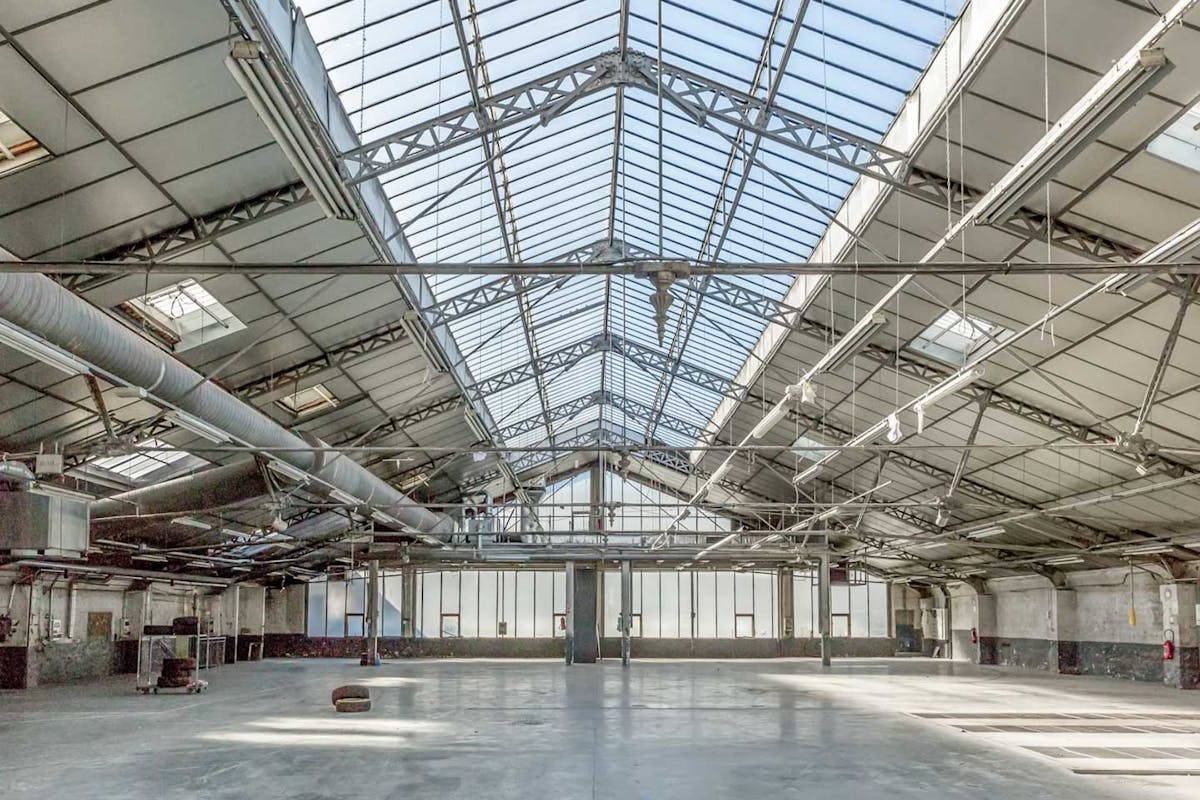
Large commercial space typically ranges from 3,500 to 10,000+ square feet and serves corporate offices, retail flagships, film and photography production studios, event venues, and warehouse operations. Chicago's market defines large commercial as any lease-ready space exceeding 2,500 square feet, though institutional and multi-tenant properties often start at 5,000+ square feet. The distinction matters because pricing, lease terms, parking availability, and loading infrastructure differ significantly between mid-sized and true large-footprint venues.
Chicago's prime commercial neighborhoods
The Loop & Financial District
- Historic center of Chicago's corporate office market. Home to the Chicago Board of Trade, Willis Tower, and the Federal Reserve. Average office space rents at $18 to $24 per square foot per year. Red Line and Brown Line L access. Dense foot traffic from business professionals and tourists. Ideal for corporate headquarters, legal firms, financial services.
West Loop
- Fulton Market corridor: historic warehouse conversions now house creative agencies, production studios, and upscale restaurants. Rents range from $16 to $28 per square foot annually depending on finish quality. Pink Line and Orange Line access. Street-level retail frontage abundant. Popular for design studios, food production, film and photography shoots.
Pilsen
- Manufacturing and creative hub south of The Loop. Warehouse and loft spaces from 4,000 to 20,000+ square feet. Average rates $10 to $18 per square foot per year—lower than downtown. Pink Line and Red Line. Loading docks and high ceilings standard. Preferred by artists, light manufacturers, music studios, event production.
River North
- Premium retail and hospitality district. Gallery, showroom, and restaurant leasing from $25 to $50+ per square foot annually. Close to Millennium Park, Chicago River, and North Michigan Avenue shopping. Red and Brown Line access. High foot traffic. Best for retail flags, galleries, concept restaurants, event spaces.
Wicker Park & Logan Square
- Startup and hybrid-use corridor. Office, retail, and light production mix. Rents $14 to $22 per square foot per year. Blue Line access. Younger demographic, vibrant street life. Popular for tech offices, creative agencies, pop-up retail, events.
Ukrainian Village & Bucktown
- Emerging creative district west of downtown. Warehouse and loft conversion inventory. $12 to $20 per square foot annually. Blue Line. Parking more abundant than downtown. Suitable for production studios, art galleries, maker spaces.
Pricing and market data
Chicago's large commercial space rental market varies by neighborhood, use case, and lease term. Office space in The Loop averages $18 to $24 per square foot per year; West Loop creative spaces range $16 to $28 per square foot depending on finish and amenities. Warehouse and production space in Pilsen and Ukrainian Village runs $10 to $18 per square foot annually. River North retail commands a premium: $25 to $50+ per square foot per year.
Monthly rent for a 5,000 square foot office in The Loop typically ranges from $7,500 to $10,000; the same footprint in West Loop runs $6,700 to $11,700. Warehouse space of equivalent size in Pilsen averages $4,200 to $7,500 per month. Pricing assumes triple-net lease structures (tenant pays a pro-rata share of property taxes, insurance, and common area maintenance). All-inclusive rents (landlord-managed utilities and maintenance) run 15 to 25 percent higher.
Market data reflects 2025 averages compiled from Chicago commercial real estate sources and brokerage reports. Actual rents fluctuate by specific location, lease length, tenant profile, and economic cycles.
How to choose the right large commercial space
Foot traffic and visibility. River North, The Loop, and Fulton Market deliver high pedestrian volume. If your business benefits from walk-in customers (retail, food service, gallery), prioritize these neighborhoods. Back-office, warehousing, and production can accept lower foot-traffic areas and lower rents in Pilsen or Ukrainian Village.
Parking and loading. Downtown (The Loop, River North) offer valet and structured parking but at premium cost. West Loop and Pilsen provide more surface and lot parking plus dedicated loading docks—critical for retail delivery, film sets, or manufacturing.
Ceiling height and column-free space. Warehouse and production venues require 14+ foot ceilings and minimal interior columns. Pilsen and Ukrainian Village warehouses typically offer this; downtown office conversions may not. Verify before signing.
Transit access. The Loop, River North, and West Loop sit on multiple L lines (Red, Brown, Orange, Pink, Blue). Wicker Park and Logan Square are served by the Blue Line. If employees rely on public transit, proximity to a major L stop reduces parking burden and improves recruitment.
Zoning and flexibility. The Loop is zoned strictly commercial and office. West Loop and Pilsen allow mixed-use (office, retail, light manufacturing, events in the same building). If you anticipate operating across multiple use cases, west and south neighborhoods offer more flexibility.
Peak seasons and lease timing
Chicago's commercial leasing activity peaks from March through May and again in September and October, coinciding with corporate budget cycles and back-to-school/Q4 retail planning. McCormick Place and Navy Pier host major trade shows and conferences during these windows, driving demand for event and hospitality space. Lease availability tightens in these months; negotiate early or consider off-peak (January, July, November) when landlords are more flexible on terms and pricing.
Size comparison: large vs. medium vs. warehouse
Large commercial space (3,500 to 10,000+ sq ft)
- Typical use: corporate offices (50+ employees), retail flagships, event venues, film studios. Parking and loading infrastructure required. Premium neighborhoods (The Loop, River North, West Loop). $16 to $50+ per square foot annually. Best for: established businesses, brands needing visibility, production teams.
Medium commercial space (1,500 to 3,500 sq ft)
- Typical use: small offices (10–30 people), boutique retail, private event spaces, creative agencies. Flexible parking. Secondary neighborhoods (Wicker Park, Logan Square, Pilsen). $12 to $28 per square foot annually. Best for: startups, independent retailers, freelance teams.
Warehouse and production (4,000 to 20,000+ sq ft)
- Typical use: light manufacturing, storage, film/photo production, art studios, fulfillment. Loading docks, 14+ foot ceilings, industrial zoning required. Industrial corridors (Pilsen, Ukrainian Village, Bucktown). $10 to $20 per square foot annually. Best for: makers, artists, logistics, e-commerce, studios.
FAQ
What is the typical lease term for a large commercial space in Chicago?
Standard leases range from 3 to 10 years, with 5-year terms most common. Landlords prefer longer terms for large spaces to cover buildout and amortize vacancy risk. Short-term (monthly or 12-month) options exist but command a 10 to 20 percent premium. Flexible-term leases are rare in Chicago's institutional market but available through serviced office networks and pop-up space operators.
Can I negotiate the lease terms for large commercial space in Chicago?
Yes. Landlords negotiate on base rent, tenant improvement allowances, lease length, renewal options, and parking costs. Negotiation leverage is strongest during off-peak months (January, July) and when comparable inventory is high. Corporate tenants with strong credit and long-term commitments typically secure 5 to 15 percent discounts off asking rates. Work with a commercial real estate broker to benchmark market rates and build your proposal.
Do large commercial spaces in Chicago include utilities and maintenance?
Most operate under triple-net (NNN) leases where the tenant pays a pro-rata share of property taxes, insurance, and common area maintenance on top of base rent. Some all-inclusive leases exist (especially in newer West Loop buildings) where the landlord covers utilities and maintenance in a single rate. Always clarify with the landlord which costs are included before signing.
Which Chicago neighborhoods have the most large commercial inventory?
The Loop and River North dominate office and retail space availability. West Loop and Fulton Market lead in creative and hybrid-use conversions. Pilsen and Ukrainian Village provide the largest warehouse and production inventory at the lowest per-square-foot cost. Logan Square and Wicker Park offer growing mid-market and startup options. Check Chicago listings to filter by neighborhood and use case.
How long does it take to lease large commercial space in Chicago?
Typical timeline: 2 to 4 weeks from viewing to signed lease. Institutional tenants with multiple stakeholders can extend this to 6 to 8 weeks. Landlord approval of your business profile and financial verification adds 1 to 2 weeks. Expedited leases (14 days) are possible with strong credit, fast decision-making, and minimal customization. Turnkey spaces (ready to move in) lease faster than spaces requiring buildout.
Can I use large commercial space for events or pop-ups?
Yes, but zoning and lease type matter. Pilsen, West Loop, and Bucktown allow event and pop-up use under mixed-use zoning. The Loop and River North restrict event use in office-zoned buildings unless the lease explicitly permits it. Seek spaces marketed for flexible or multi-use occupancy. Our Pop Up Store Rental guide covers temporary-use leases in detail.


