Amsterdam's Small Retail Market
Amsterdam is a genuinely polycentric retail city, and that shapes what small stores and boutique spaces look like here. The historic city was built on plots taxed by frontage, so ground-floor units tend to run narrow and deep: four to six meters wide with a long back room, typically thirty to eighty square meters in the Centrum and the canal ring. A flat, column-free hundred square meters with a wide window is genuinely scarce. Brands that arrive with a standard European store kit usually rescale it for Amsterdam.
For a small stores and boutique spaces rental in Amsterdam, that constraint is often an advantage. A tightly curated space on a strong neighborhood street outperforms a generic one on a busier corridor, and Amsterdam has a set of independent streets with national reputations of their own.
Key Districts for Boutique Retail
The Jordaan sits immediately west of the Prinsengracht, laid out in the same seventeenth-century expansion as the canal ring. Its tight grid of small streets and short canals produces the fine-grained plot sizes that suit a boutique concept: units here are genuinely small, and the customer base is local, returning, and willing to spend.
The canal ring streets reward a different approach. The Leidsestraat runs southwest across the three main canals and is one of the busiest pedestrian links between the Centrum and the museum quarter. Its canal-crossing corners are among the most-photographed retail positions in the city. The Utrechtsestraat runs south from the Rembrandtplein and is the canal ring's own neighborhood high street: independent food, design, wine and kitchenware, with low chain penetration that has stayed low.
The Haarlemmerbuurt runs west from the Singel to the Haarlemmerplein under two names, Haarlemmerstraat then Haarlemmerdijk, and sits directly between Amsterdam Centraal and the Jordaan. The city counts more than 200 sales points along this single street, which makes it one of the eight largest shopping areas in Amsterdam.
Oud-Zuid, south and west of the Vondelpark, is the wealthiest residential district in the city. Its retail is a set of short, distinct, high-quality neighborhood streets rather than one continuous run. A boutique on the right street here reaches a resident customer rather than a passing visitor.
What 'Small' Means in Amsterdam
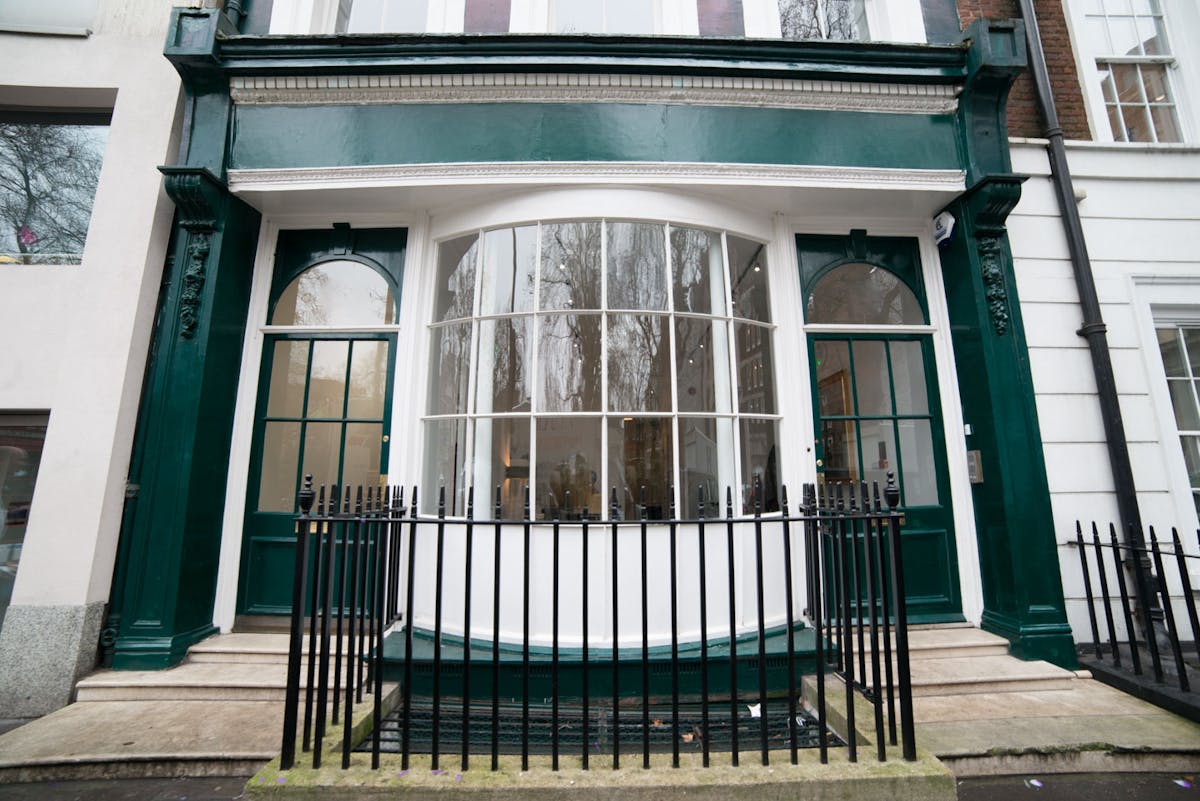
Small stores and boutique spaces in Amsterdam typically run between thirty and eighty square meters on the ground floor of a canal house. Basements are common and often reach via a steep internal stair, so stockroom space exists but moving goods through it takes planning. Many historic units also have a stoep of two or three steps at the front door, which makes step-free entry a design consideration rather than a checkbox.
Amsterdam has roughly 14,374 commercial sales points across the city. Vacancy sits at around 5% and is concentrated in a handful of covered retail centers rather than on the strong independent streets, which means short-term boutique space on those streets more often comes from a lease gap or a planned refit than from a unit nobody wants.
Booking Patterns and Seasonality
Amsterdam's two strongest trading windows for small retail are the spring shoulder and the autumn shoulder. April through June brings good weather, the spring visitor season, and a resident population that is still in town. September into early December brings the return from summer, the cultural season restarting, and then the Sinterklaas gifting run.
The biggest gifting moment in the Dutch year is 5 December, not Christmas, and the buying run builds toward it as a compressed peak rather than spreading across the month. Small, wrappable, personal gifts carry this period, and craft, stationery and packaging categories perform unusually well. A boutique space booked for November into early December is positioned at the sharpest point of Dutch retail demand.
Black Friday has become a fixture in Dutch retail and falls shortly before pakjesavond, so it functions as the opening of the Sinterklaas buying window rather than a standalone event. The discount period stretches into the following week.
Amsterdam Dance Event, the October music week, draws an international, brand-literate audience to venues across the city. Brand activations and product launches cluster around it, and boutique space in the Centrum and the Westergas area commits months ahead.
For small retail and boutique spaces for rent in Amsterdam, lead times on the best neighborhood streets are longer than they look. Availability moves quickly once a trading window becomes visible, and a brand with a flexible window on dates holds a real advantage.
Amsterdam Dance Event and Brand Weeks
The October music week is the closest Amsterdam gets to a brand activation week in commercial terms. An international, high-spending audience stays several nights and looks for things to do in the daytime. A boutique space booked for this window reaches a customer who is in the city specifically and browsing actively.
More Retail Space in Amsterdam
For the full range of retail space in Amsterdam, including larger formats and multi-room configurations, the parent search page covers the whole city.
The Red Light District has its own page with spaces in that part of the Centrum, where the city's tourist-density rules and evening management shape what trades well.
For context on how brands have used short-term space in Amsterdam, How Amnesty International Used a Pop-Up Store in Amsterdam to Launch the "World Peace" Campaign is a worked example of a small-format Amsterdam activation, and How Brands Use Pop-Up Spaces During Amsterdam Dance Event covers the October activation window in detail.
For the broader project context, Pop-Up Store Rental covers the full short-term retail model.
FAQ
What counts as a small store or boutique space in Amsterdam?
In Amsterdam's historic core, ground-floor units typically run between thirty and eighty square meters, shaped by the narrow canal-house plots the city was built on. A boutique space in this range is the norm rather than the exception, and a flat hundred square meters with a wide shop window is genuinely hard to find on the independent neighborhood streets.
Which Amsterdam neighborhoods suit boutique retail best?
The Jordaan, the canal ring streets including Leidsestraat and Utrechtsestraat, the Haarlemmerbuurt, and Oud-Zuid are the neighborhoods most associated with independent boutique retail. Each has a distinct customer and a different mix of unit sizes and character. The right choice depends on whether the brand is targeting a resident, a visitor, or both.
How long do small retail bookings typically run in Amsterdam?
Bookings range from a single day to several months. A seasonal activation for the Sinterklaas period runs for the length of the buying window. A brand testing the Dutch market usually takes longer, to allow time for the concept to find its audience. A booking is agreed with the host rather than negotiated as a commercial lease, so a run that trades well can be extended.
Do I need a permit to run a pop-up in an existing retail unit?
Requirements depend on the space, its permitted use, and the nature of the activity. These are worth confirming with the landlord and the local authority before booking rather than assuming from the category.
When should I book to secure a boutique space for the Sinterklaas period?
The window around pakjesavond on 5 December is the strongest single trading period in the Dutch gifting calendar, and the best neighborhood spaces commit well ahead of it. Brands with a firm concept and flexible dates are in the strongest position. Enquiring well ahead of the window you want is the practical move, and availability varies by street and unit.
Can a brand from outside the Netherlands rent retail space in Amsterdam?
Yes. English works in Amsterdam retail without qualification. What registration a foreign company needs in order to trade depends on the activity and on current Dutch rules, so take advice on it early: it is administrative rather than difficult, but it takes longer than a brand that decided on the space last week will like.