
Pop-up shops have become one of the most powerful tools in modern beauty retail. From global cosmetics giants to influencer-founded brands, beauty pop-up stores are redefining how brands launch products, educate customers and build emotional connection.
As department store counters decline and digital acquisition costs rise, beauty brands are increasingly turning to temporary retail to create immersive, high-impact moments in physical space.
Whether you’re planning a cosmetic pop-up store, skincare activation or limited-edition beauty launch, this guide explores how successful beauty brand pop-up stores are structured — and how to execute one strategically.
If you’re ready to explore available spaces globally, you can browse retail pop-up spaces worldwide on Storefront.
Why Beauty Brands Invest in Pop-Up Shops
Beauty is experiential by nature. Customers want to test shades, feel textures and receive personalized recommendations before purchasing.
A beauty pop-up store allows brands to:
- Launch limited-edition collections
- Drive product sampling and trial
- Reduce online customer acquisition costs
- Collect real-time feedback
- Create social-media-first experiences
- Educate consumers about ingredients and innovation
- Build community through workshops and consultations
For digital-first beauty brands, pop-ups also act as a bridge between ecommerce and in-person engagement. If you’re exploring that transition, see our guide to bringing an e-commerce brand to life with pop-up stores.
Core Objectives of Successful Beauty Brand Pop-Ups
While formats vary, the most successful beauty pop-up shops tend to focus on four strategic pillars:
1. Product Trial and Education
Unlike apparel or accessories, beauty products require demonstration. In-store makeup artists, skincare consultations and ingredient storytelling play a critical role in conversion.
Experiential retail environments amplify this effect. Our analysis of experiential retail case studies shows how immersive formats increase brand recall and engagement.
2. Community and Brand Loyalty
Beauty brands increasingly design pop-ups as community hubs — offering tutorials, influencer appearances, workshops and personalization stations.
This fosters emotional connection and strengthens retention.
3. Content and Social Amplification
Beauty pop-ups are inherently Instagrammable. Strategic lighting, bold scenography and themed installations encourage user-generated content, expanding reach beyond the physical footprint.
4. Market Testing and Expansion
Pop-ups allow brands to test neighborhoods, cities and international markets before committing to permanent retail.
Cities such as New York, London, Paris, Los Angeles and Milan are especially strong for cosmetic pop-up stores due to their fashion and media ecosystems.
Case Studies: Successful Beauty Pop-Up Store Examples
Below are standout beauty pop-up examples that illustrate different strategic approaches.
Huda Beauty – Immersive Launch in Covent Garden, London
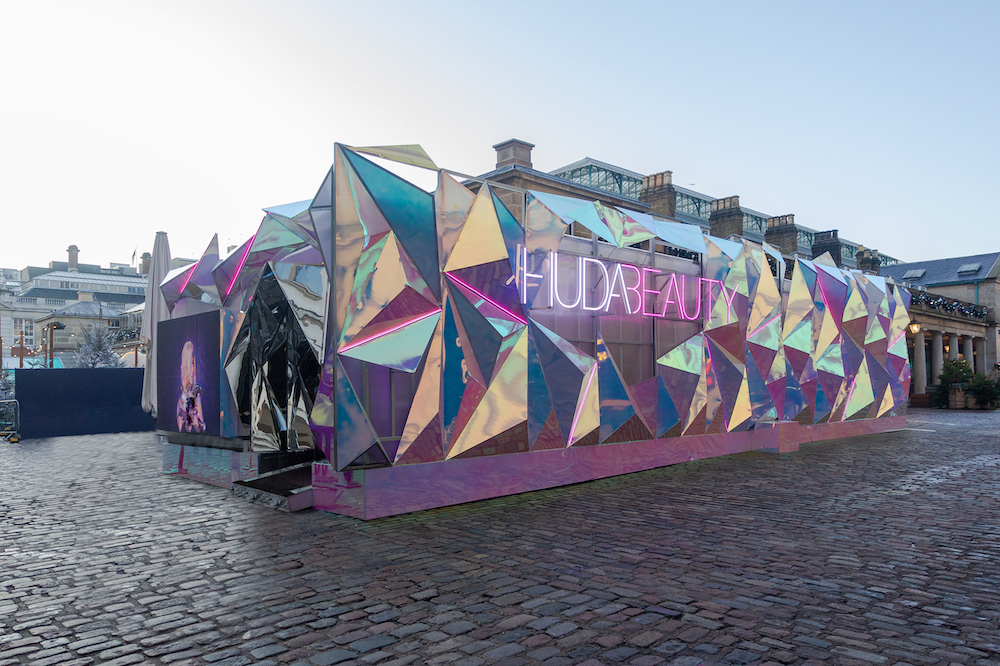
Huda Beauty created significant buzz with its experiential pop-up in Covent Garden. The space was designed as a cosmic-inspired retail environment, blending limited-edition product drops with immersive scenography.
The activation successfully translated the brand’s digital identity into a physical space, reinforcing social sharing and exclusivity.
Read the full case study: Huda Beauty Pop-Up in Covent Garden
London remains one of the strongest cities globally for beauty pop-ups. Browse available retail spaces in London.
Clarins – “Color Garden” Pop-Up in Le Marais, Paris
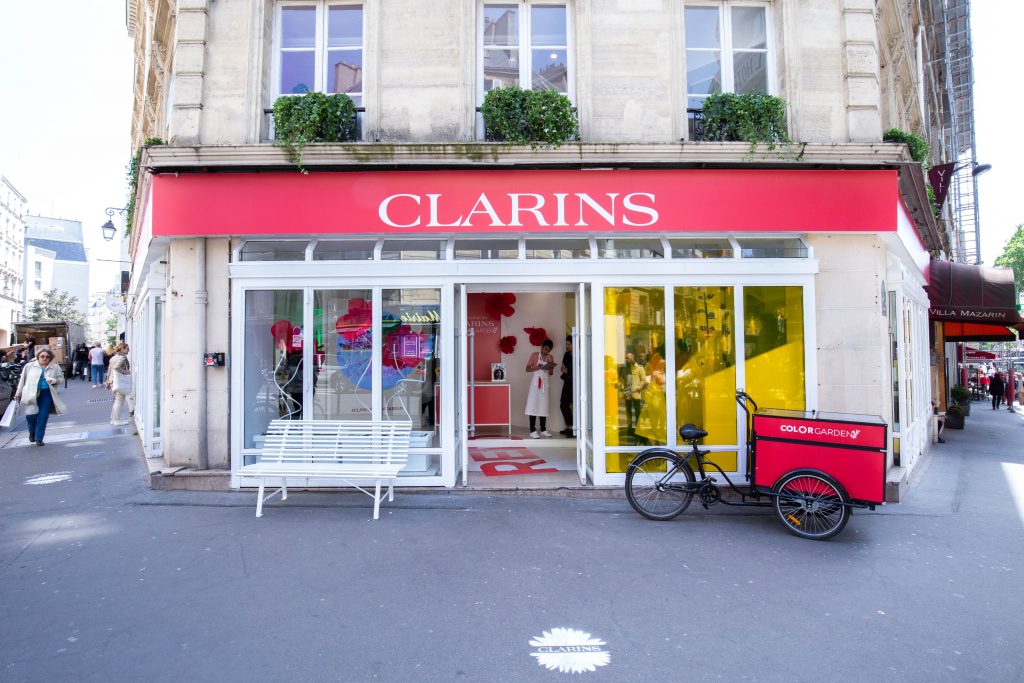
Clarins transformed a two-level space in Le Marais into a multi-zone “Color Garden” experience. Each section was color-coded and built around storytelling themes — from plant-based ingredients to makeup artistry.
The activation combined education, immersive design and Instagram-ready environments, attracting thousands of visitors.
Explore the case study: Clarins Beauty Pop-Up in Le Marais
Paris continues to be a strategic city for luxury and beauty activations. View retail spaces in Paris
Code8 – Personalized Beauty in Burlington Arcade, London
British beauty brand Code8 used its London pop-up to offer express makeovers and curated “edit” boxes tailored to individual preferences.
The focus on customization and expert consultation positioned the brand as both premium and community-driven.
Read more: Code8 Pop-Up in Burlington Arcade
Lycored – Experiential Wellness Pop-Up in SoHo, New York
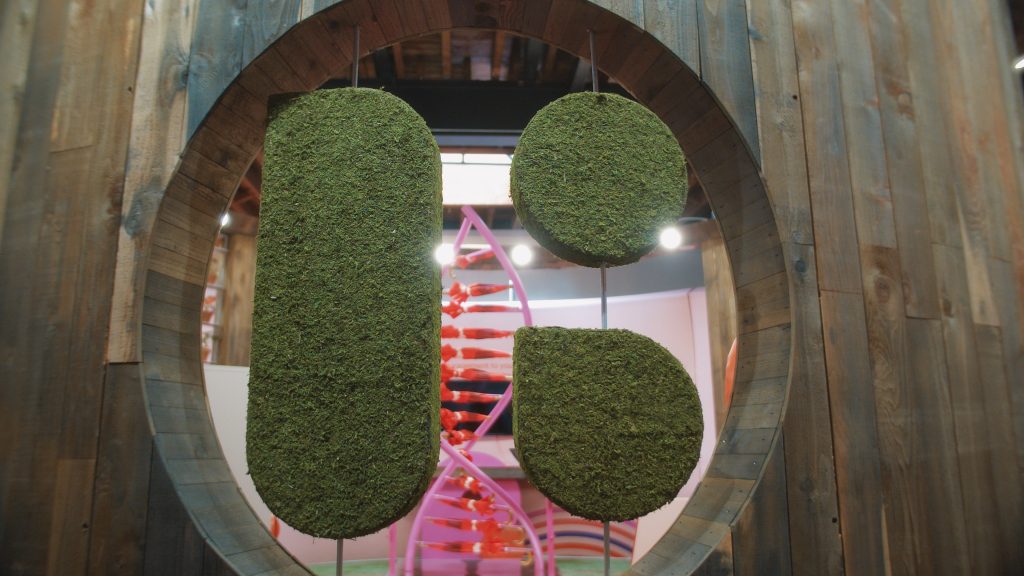
Lycored’s “Cycle of Glow” activation in SoHo focused on education and scientific storytelling. Rather than a traditional cosmetics pop-up store, it functioned as an experiential hub introducing ingestible skincare research.
The objective was to create emotional connection while positioning the brand as a category leader.
See the full activation: Lycored’s SoHo Pop-Up Experience
New York remains one of the most effective markets for experiential beauty retail. Browse pop-up spaces in New York.
Makeup Geek – Influencer-Led Pop-Up in SoHo
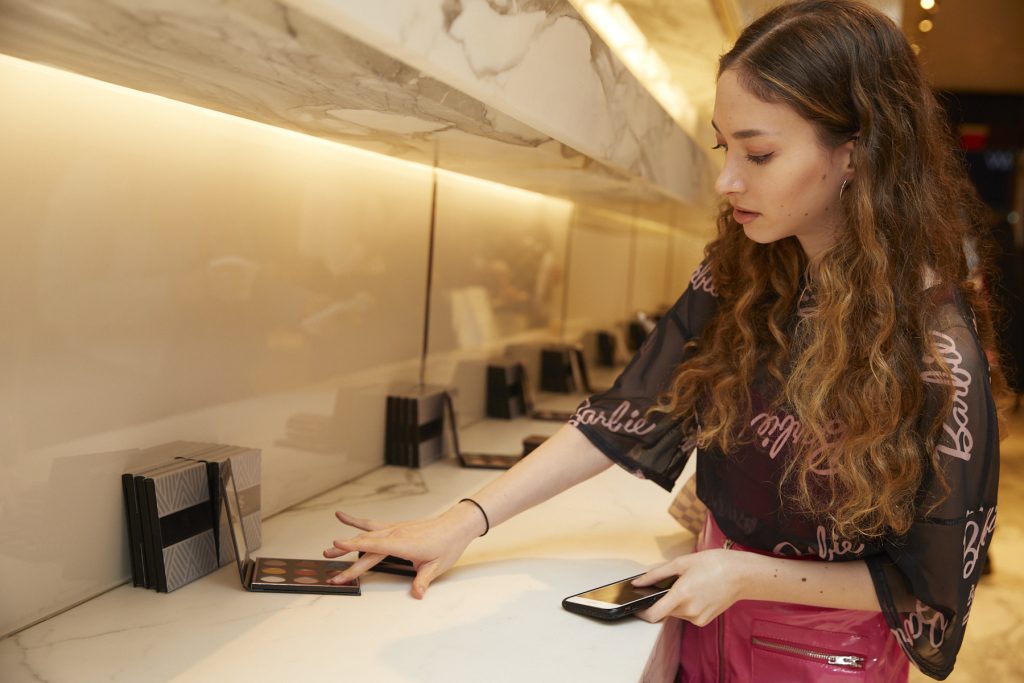
Makeup Geek’s founder, beauty influencer Marlena Stell, launched a short-term dual-concept pop-up in SoHo to connect directly with her audience.
The four-day format emphasized urgency and exclusivity while allowing the brand to test physical retail in a major market.
Read more: Makeup Geek Dual Pop-Up in SoHo
Types of Beauty Pop-Ups That Perform Best
1. Limited-Time Launch Pop-Ups
Designed around product drops or collaborations, often running for 3–14 days.
2. Consultation-Driven Pop-Ups
Featuring makeup artists, skincare experts and personalized diagnostics.
3. Experiential Concept Stores
Immersive, themed environments that blend retail, storytelling and content creation.
4. Travel and Tourism Pop-Ups
Airport or seasonal activations targeting high dwell-time audiences.
5. Hybrid Beauty + Lifestyle Pop-Ups
Combining cosmetics with fashion, wellness or interior design elements — similar to Rue Saint Paul’s month-long pop-up in NYC.
Designing a High-Performing Beauty Pop-Up Store
Beauty retail requires specific design considerations:
- Strong lighting for shade matching
- Mirrors and testing stations
- Hygienic sampling systems
- Clear product categorization
- Consultation-friendly layouts
- Storage for replenishment
If you’re planning layout and spatial flow, see our complete guide to pop-up store design.
Choosing the Right City for a Beauty Pop-Up
Location influences both brand perception and performance.
- New York: Strong for influencer-led launches and experiential skincare.
- London: Ideal for global beauty drops and immersive activations.
- Paris: Luxury and botanical storytelling align well with heritage brands.
- Los Angeles: Wellness-driven beauty performs particularly well.
- Miami: Seasonal, lifestyle-focused cosmetic pop-ups.
- Milan: Fashion-aligned beauty and luxury launches.
Explore retail spaces in:
Or start a global search for beauty pop-up spaces on Storefront.
Budgeting for a Beauty Pop-Up Shop
Beauty activations often require:
- Specialist staff (makeup artists, skincare consultants)
- Branded build-outs
- Sampling inventory
- Lighting and mirror installations
- Event programming
For a detailed breakdown of costs and financial planning, see our guide to pop-up shop budgeting.
Final Thoughts: Why Beauty and Pop-Ups Are a Natural Fit
Few industries benefit from temporary retail as directly as beauty.
The ability to combine product trial, immersive design, social amplification and limited-edition drops makes beauty pop-up stores uniquely powerful. Whether for launching a new cosmetics line, entering a new market or creating experiential brand moments, short-term retail provides flexibility without long-term commitment.
If you’re planning a beauty pop-up shop or cosmetics pop-up store, start by identifying your core objective — product trial, brand awareness, community building or market testing — then align location and design accordingly.
When you’re ready to find the right space, browse available pop-up retail spaces globally on Storefront and bring your beauty brand to life offline.
Frequently Asked Questions About Beauty Pop-Up Shops
What is a beauty pop-up shop?
A beauty pop-up shop is a temporary retail space where cosmetic or skincare brands showcase products for a limited time. These activations often focus on product sampling, influencer engagement, immersive design and limited-edition launches to create urgency and excitement.
Unlike traditional counters or permanent stores, beauty pop-ups are designed to be experiential and highly shareable.
Why are beauty brands using pop-up stores?
Beauty brands use pop-up stores to:
- Launch new product collections
- Generate buzz and social media visibility
- Offer in-person consultations and shade matching
- Test new cities or markets
- Reduce digital customer acquisition costs
- Build emotional connections with customers
Temporary retail allows brands to create high-impact moments without long-term lease commitments.
How long does a beauty pop-up store typically last?
Most beauty pop-up stores run between 3 days and 4 weeks. Shorter formats (3–7 days) are often used for product drops or influencer-driven launches, while month-long activations are used for experiential campaigns or market testing.
The duration depends on budget, inventory strategy and campaign objectives.
What makes a successful beauty pop-up store?
Successful beauty brand pop-up stores typically include:
- Strong lighting and testing areas
- Professional makeup artists or skincare experts
- Instagrammable design elements
- Limited-edition products
- Personalized consultation experiences
- Clear brand storytelling
Immersion and education are key drivers of conversion in cosmetic pop-ups.
What cities are best for a cosmetics pop-up store?
Top-performing cities for beauty pop-ups include:
- New York
- London
- Paris
- Los Angeles
- Miami
- Milan
These cities offer strong fashion ecosystems, influencer communities and high foot traffic, making them ideal for cosmetic brand activations.
How much does it cost to launch a beauty pop-up shop?
Costs vary depending on:
- City and neighborhood
- Size of space
- Build-out and design requirements
- Staffing (makeup artists, consultants)
- Marketing and event programming
Beauty activations often require additional investment in lighting, testing stations and sampling inventory compared to other retail categories.
For a detailed breakdown, see our guide to pop-up shop budgeting.

Related posts:
 Why You Should Launch An Unprofitable Pop-up Store
 What is a pop-up shop? Everything you need to know to try short-term retail
 How to Set Up a Pop-Up Art Gallery: 8 Steps to Renting and Launching Your Exhibition
 Offline Marketing Ideas for Pop-Up Shops
 The 5 Types of Pop-Up Shops (With Examples) & How to Choose the Right One