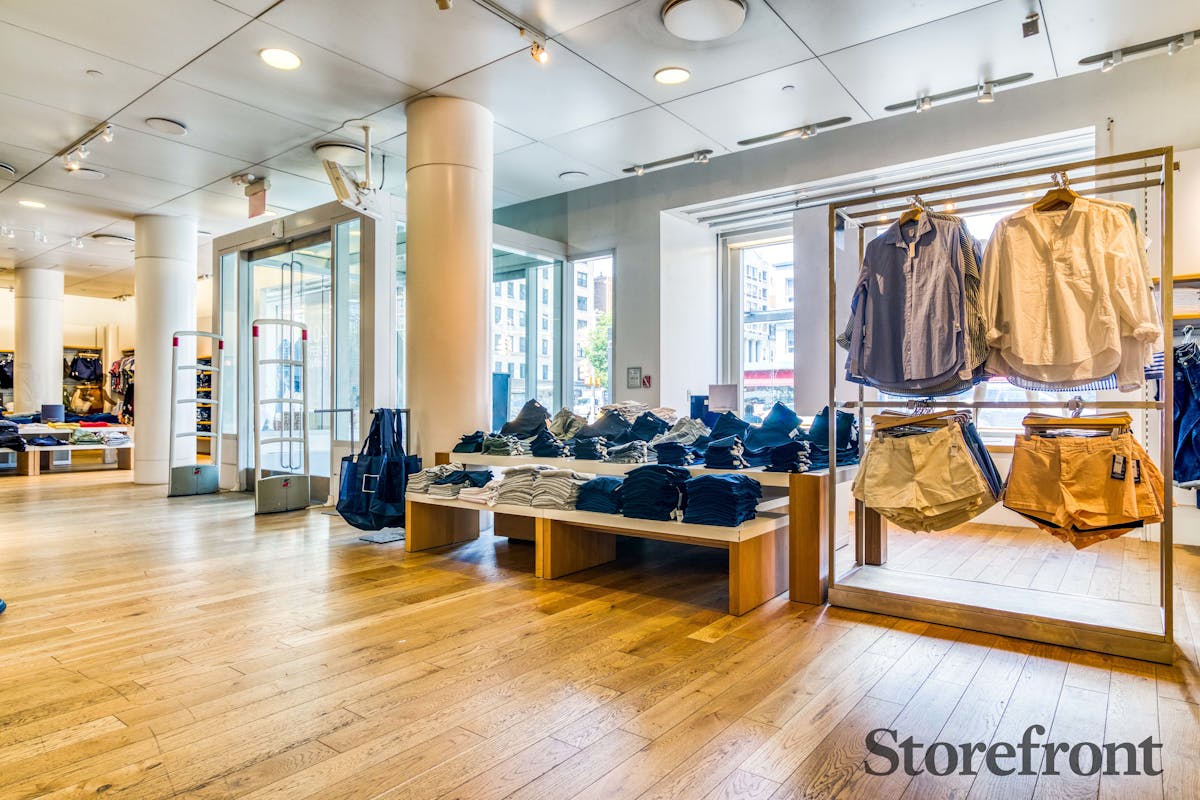
Taking a shop in Shoreditch means committing to a district where the retail is unlike anything on a conventional high street. The buildings are former warehouses and light-industrial units, the frontages are wide, the ceilings are high, and the interiors are raw. That is the reason brand activations and independent labels choose to trade here rather than on a managed shopping street, and it is the reason a lease of three months or longer repays the fit-out investment that a shorter stay would not justify.
Where the units are
Shoreditch High Street runs above the Overground station and holds the largest units in the district, including purpose-built retail space. It is the most conventional retail frontage in an area otherwise made of converted warehouses.
Redchurch Street is the most design-led retail run in Shoreditch, a short street of small independent and brand-owned units off Shoreditch High Street. Brick Lane runs south from Bethnal Green Road through the district, with small frontages and a heavily weekend-weighted trade. Commercial Street is the main road frontage for the Spitalfields quarter, with larger units than the lanes behind it.
Old Street and Curtain Road form the western edge, closer to the City and more office-weighted. Hoxton Square and Rivington Street hold the gallery and studio cluster at the northern end, with small units and a strong evening trade.
What the stock looks like
London retail units are small by international standards. Outside the flagship streets and managed centres, a typical ground-floor shop is a narrow Victorian or Georgian frontage over one or two floors, often with a basement and limited rear access. Brands used to American floorplates should expect to work vertically rather than horizontally.
In Shoreditch the picture is different from the London average. The former warehouse stock gives wider ground-floor spans and higher ceilings than the terraced shopfronts elsewhere in the city. That raw, open format is what makes the area work for retail concepts that need space to build an interior from scratch, which is also why a commitment of several months makes more sense here than a few days: the fit-out justifies a longer term.
Nearby markets and trading patterns
Old Spitalfields Market is a covered Victorian market hall trading seven days a week, with a mix of permanent units and short-term stalls. It is one of the most established routes into retail in east London. Columbia Road holds a flower market on Sundays and a run of very small independent shops that open around it, one of the most concentrated weekend trading patterns in the city.
Liverpool Street sits on the boundary between the City and Shoreditch and is one of the busiest stations in the country. The managed estate around it holds a large weekday office population and its own retail programme, bridging City footfall and the creative districts to the north. For a shop on a longer lease, that weekday-to-weekend split across the district shapes how you staff and how you merchandise.
Who Shoreditch suits
The customer here skews young, the area trades hardest in the evening and at weekends, and the retail mix leans toward independent and emerging labels rather than established chains. A retail space for rent in this district works best for brands whose product and visual identity suit a raw, design-forward setting.
If you are looking for a small storefront rather than a large floorplate, the streets off Shoreditch High Street, particularly around Redchurch Street and Brick Lane, carry the smallest frontages. Brands that need living quarters alongside their trading space may also consider a storefront with apartment format, where the upper floors serve as accommodation.
Timing and seasonality
Demand for space in London peaks around the fashion weeks in February and September, through the run-up to Christmas, and again around the autumn art and design festivals. August is the quietest month, when a large share of the city leaves and office footfall drops.
The London Design Festival runs across the city each September, with Shoreditch named as one of its design districts. That week generates broad demand for showroom and installation space in exactly this area. For a shop on a lease of several months, signing ahead of the autumn season means trading through the busiest stretch of the London calendar.
Frequently Asked Questions
What kind of units are available as shops to let in Shoreditch?
Most units are converted from former warehouse and light-industrial buildings, giving wide ground-floor frontage, high ceilings and raw interiors. Shoreditch High Street holds the largest purpose-built retail spaces, while streets like Redchurch Street and Brick Lane carry smaller, independent-scale frontages.
How long are the lease terms for a shop to let in Shoreditch?
Leases on these listings typically run from three months to twenty-four months. A commitment of several months justifies the fit-out investment that the raw warehouse interiors here tend to require.
When is the best time to take a shop in Shoreditch?
The busiest trading periods run through the fashion weeks in February and September, the autumn design and art festivals, and the Christmas run. Signing ahead of the September season puts you in the district for its strongest stretch.